Scales / The picks
The best bariatric portion control containers, sized to a quarter-cup meal
Post-surgery eating breaks every assumption normal meal prep gear is built on: the portion is a few ounces, there are six to eight of them a day, and protein is counted in grams. These five are ranked on how small they go and whether the lid will survive a bag.
By Mike M.Updated Researched from maker spec pages
#adMeal & Macro earns from qualifying Amazon purchases. Prices are set by the retailer and change. A commission never decides a ranking. How we score · Disclosure
Quick picks
The picks at a glance
| # | Product | Best for | Rubric score | Price |
|---|---|---|---|---|
| 1 | 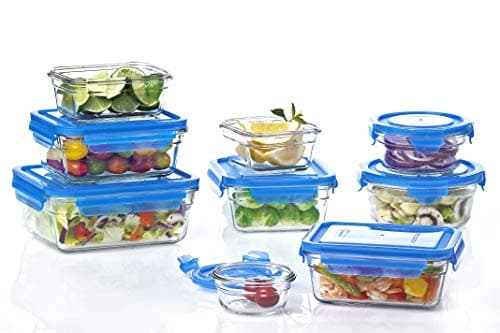 Glasslock 18-piece Oven Safe Set (11292) Tempered glass · latching lid The set's 0.7-cup round and 1.5-cup square are the two most useful post-surgery vessels sold anywhere: tempered glass, a four-tab latch with a removable gasket, and a size that does not leave a meal rattling around in a four-cup box. You are buying a nine-piece set for its two smallest pieces, and it is still the right buy. | Best overall: the small end of a glass set | 7.7 /10 | $38.99Amazon |
| 2 | 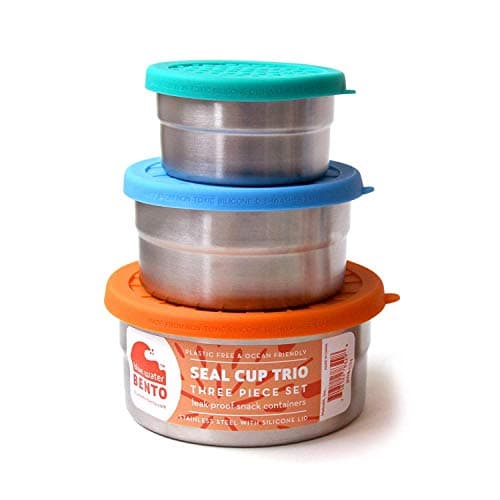 ECOlunchbox Blue Water Bento Seal Cup Trio Type 304 steel · silicone lids Three nesting Type 304 steel cups at 20, 12 and 7 oz with silicone lids ECOlunchbox calls leak-proof. The 7 oz cup is a stage-appropriate meal, the set weighs 9.6 oz, and steel never stains or holds the smell of a pureed meal. It cannot go in a microwave, ever. | Best sealed small cups | 8.0 /10 | $34.00Amazon |
| 3 | 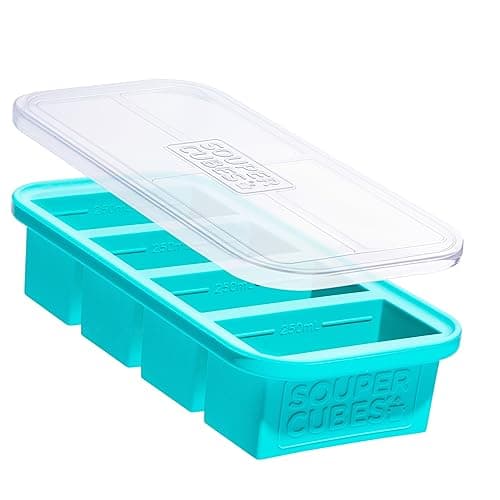 Souper Cubes 1-Cup Freezer Tray Silicone tray · steel frame Four 1-cup wells with fill lines at half a cup and 125 mL, in silicone with a steel frame. Cook once, freeze the week in half-cup blocks, bag the blocks, get the tray back. The single most useful tool here if you cook for a household and eat differently from it. | Best for portioning a batch | 7.6 /10 | $21.99Amazon |
| 4 | 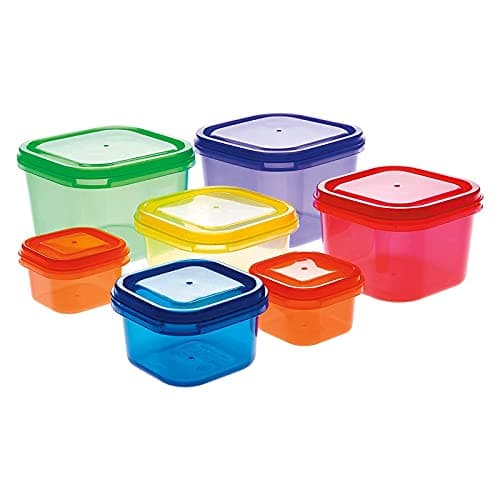 BODi 21 Day Fix Portion Control Containers (7-piece) Color-coded portion kit The yellow container is half a cup, the blue is a third, and the two orange are two tablespoons each — the exact volumes the early stages are prescribed in. It measures at the counter and nothing more: BODi makes no leak-proof claim, so the food moves into something else to travel. | Best way to measure without a scale | 5.6 /10 | $9.95Amazon |
| 5 | 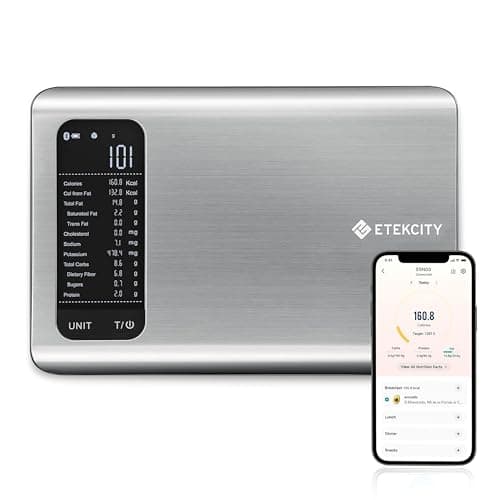 Etekcity ESN00 Smart Nutrition Scale 1 g · 11 lb · VeSync app A 1 g, 11 lb scale with a tare button and an app that can total a day. Portion volume is what a container controls; a daily protein target in grams is what a scale controls, and the two jobs are not the same. | Best for the protein target | 7.9 /10 | $39.99Amazon |
#ad · Prices come live from Amazon, last checked November 4, 2026. Order is the author's pick for this page's buyer; the score is the rubric's judgment of the product against its whole category, from the maker's page (or the retailer's, where labeled) — the two can disagree, and the write-up says why. Product photos come from each product's Amazon listing; any photo that is illustrative stock is labeled as such. Tap a row for the full write-up.
What the portion actually is
Almost all meal prep gear is designed around a four-cup meal. After bariatric surgery the meal is a fraction of that, and every piece of advice that follows from the four-cup assumption — bigger sets, stackable rectangles, 6.75-cup bowls — becomes actively wrong. Before any pick makes sense, it is worth seeing the published numbers.
Read that as a gear brief and three numbers jump out. A quarter-cup solid portion is two fluid ounces — smaller than the smallest container in most food storage sets. Six to eight meals a day means you are not packing one lunch, you are packing a sequence, and they all have to seal. And 65 to 75 grams of protein is a weight, not a volume, which is why a scale appears on a page about containers.
One more thing changes. A quarter cup of food in a four-cup container is mostly air, and air is what dries food out in a fridge and burns it in a freezer. Matching the vessel to the portion is not tidiness here; it is how the food is still edible on day three.
The five things that decide a pick
- How small the smallest vessel is. The useful band is roughly 2 to 8 fluid ounces, which is a quarter cup to a cup. Below that you are into condiment pots; above it you are back to a normal lunch container with a spoonful in the bottom.
- A seal the maker will stand behind. Several small containers riding in one bag is the hardest test a lid gets — more lids, more edges, more chance of one popping. A latch or a thread beats a press-on lid, and "airtight" is a different claim from "leak-proof". We quote whichever word the maker chose.
- A repeatable measurement. Either the vessel is the portion (a 0.7-cup container filled level), or it has a fill line (the Souper Cubes half-cup mark), or something else measures and you decant. Eyeballing a quarter cup six times a day drifts, and it drifts upward.
- Reheating without ruining it. Two ounces of food reheats in seconds and overcooks almost as fast. Glass takes a microwave and lets you watch; steel cannot go in one at all; thin plastic warps in a hot dishwasher before it ever fails in a microwave.
- Washing load. Eight meals a day is a lot of small lids. Dishwasher-safe matters more here than on any other page on this site, and so does whether the set nests back into a cabinet.
Those five are also the reason this page does not simply repeat best portion control containers, which ranks color-coded kits for people who would rather fill than weigh. The kits measure a one-cup vegetable serving; here the whole meal is smaller than that one container.
The smallest vessel in each pick
| Pick | Smallest vessel | Seal, in the maker's words | Material | Microwave |
|---|---|---|---|---|
| Glasslock 18-piece Oven Safe | 0.7-cup round (also a 1.5-cup square, a 1.6-cup round and a 1.6-cup rectangle) | Four-tab locking lid with a removable silicone gasket; the distributor FAQ calls it "airtight and leak-proof" | Tempered glass, polypropylene lids | Yes, lid off — "the lid should never be closed while reheating food in the microwave" |
| ECOlunchbox Seal Cup Trio | Small cup "7 oz (0.625 cups)" | Silicone lids described as "leak-proof" | "Type 304 stainless" | No — "not for use in the microwave" |
| Souper Cubes 1-cup tray | Half-cup fill line in a 1-cup well | "Snug-fitting lid" — no leak-proof claim; freezer, not transport | "100% US FDA-food grade silicone" with an embedded steel frame | Not stated; the trays are rated to a 415°F oven |
| BODi 21 Day Fix kit | Orange container, 2 tablespoons (blue ⅓ cup, yellow ½ cup) | No leak-proof or airtight claim published | "BPA-free, DEHP-free" plastic | "Top-rack dishwasher safe and microwave safe" |
| Etekcity ESN00 scale | n/a — 1 g graduation, 11 lb capacity | n/a | n/a | n/a |
Every capacity and care line is the maker's own published wording (Glasslock's care wording comes from its distributor FAQ, labeled as such on the product card). Where a maker declines to say "leak-proof", this table declines too.
How many containers you need
Six to eight small meals a day is the specification nobody shops for. Do the arithmetic honestly: if three of those meals leave the house, you are carrying three sealed vessels plus a drink, every day, and washing six to eight small lids every night. Two practical consequences follow.
Buy in multiples of the day, not the week. Three or four small sealed vessels covers a day away from home; a full week of them is twenty-plus containers and a cabinet problem. The better pattern is a day's worth of carry vessels plus a freezer full of portioned blocks, which is exactly what the Souper Cubes tray plus a bag of blocks gives you.
Freeze in the portion, not in the batch. One cooked chicken breast and a cup of soup is several meals at this stage. Frozen as one block it is unusable; frozen as four half-cup blocks it is four meals that thaw in minutes. Store the blocks in one bag rather than one container each — the reusable silicone bags are ranked separately. The freezer workflow in full — what freezes well, what does not, and how to stop freezer burn in small portions — is on how to freeze meal prep without freezer burn.
Where this page stops
This is a gear page written by people who cover meal prep containers, not clinicians. It does not tell you what to eat, how fast to progress through stages, or what your protein target should be — your surgical team and dietitian own all three, and the numbers quoted above are one medical center's published guidelines, cited so you can see the sizes we designed the criteria around.
What the site can help with, once your plan is set: the arithmetic of volumes and grams on portion control container sizes explained, the raw-versus-cooked weighing rule that decides whether your protein count is right on weigh food cooked or raw, and how long prepped food actually keeps on how long does meal prep last in the fridge.
In detail
The picks, in full
Rank 01
Best overall: the small end of a glass set
Glasslock 18-piece Oven Safe Set (11292)
The set's 0.7-cup round and 1.5-cup square are the two most useful post-surgery vessels sold anywhere: tempered glass, a four-tab latch with a removable gasket, and a size that does not leave a meal rattling around in a four-cup box. You are buying a nine-piece set for its two smallest pieces, and it is still the right buy.
EvidenceResearched · maker-sourced
How the 7.7 score breaks down
- Seal & leak design (25%)
- 9
- Material & thermal range (25%)
- 9
- Lid longevity & replacement availability (15%)
- 5
- Stack / nest footprint (15%)
- 6
- Dishwasher & stain resistance (10%)
- 8
- Value (10%)
- 7
What the spec page supports
- Latching, gasketed lids — the design that actually survives a sideways bag
- Oven-rated base on the oven series (the OVEN SAFE mark is on the glass)
- Nine sizes, three shapes, every lid the same locking design
Where it falls short
- The US maker page publishes set contents and little else; the care wording comes from a distributor FAQ, labeled as such
- Gaskets are not sold separately in the US, so a torn seal means a new lid
- Mixed shapes: the rectangles nest, the rounds and squares don't join the stack
Skip this if…
…you want the lid microwaved on — Glasslock's own guidance is lid off, and a vented plastic set (Rubbermaid Brilliance) is the microwave-with-lid answer.
#ad · Price as of November 4, 2026 · Disclosure for the link to Glasslock 18-piece Oven Safe Set (11292)
Rank 02
Best sealed small cups
ECOlunchbox Blue Water Bento Seal Cup Trio
Three nesting Type 304 steel cups at 20, 12 and 7 oz with silicone lids ECOlunchbox calls leak-proof. The 7 oz cup is a stage-appropriate meal, the set weighs 9.6 oz, and steel never stains or holds the smell of a pureed meal. It cannot go in a microwave, ever.
EvidenceResearched · maker-sourced
How the 8.0 score breaks down
- Seal & leak design (25%)
- 8
- Material & thermal range (25%)
- 8
- Lid longevity & replacement availability (15%)
- 7
- Stack / nest footprint (15%)
- 9
- Dishwasher & stain resistance (10%)
- 10
- Value (10%)
- 6
What the spec page supports
- A stainless set that actually claims a leak-proof seal, which most do not
- Oven safe as well as dishwasher safe — you can reheat in the container you packed
- 9.6 oz for five cups of capacity: a third of the weight of the same volume in glass
Where it falls short
- No microwave, ever — steel in a break room means the oven or nothing
- Round cups waste space in a square bag and hold less than a tray of the same footprint
- Silicone lids are the wear part, and no replacement-lid page is published
Skip this if…
…the only heat source at work is a microwave — buy glass or vented plastic, because steel will never go in one.
#ad · Price as of November 4, 2026 · Disclosure for the link to ECOlunchbox Blue Water Bento Seal Cup Trio
Rank 03
Best for portioning a batch
Souper Cubes 1-Cup Freezer Tray
Four 1-cup wells with fill lines at half a cup and 125 mL, in silicone with a steel frame. Cook once, freeze the week in half-cup blocks, bag the blocks, get the tray back. The single most useful tool here if you cook for a household and eat differently from it.
EvidenceResearched · maker-sourced
How the 7.6 score breaks down
- Seal & leak design (25%)
- 5
- Material & thermal range (25%)
- 9
- Lid longevity & replacement availability (15%)
- 9
- Stack / nest footprint (15%)
- 8
- Dishwasher & stain resistance (10%)
- 8
- Value (10%)
- 7
What the spec page supports
- Portions frozen as blocks you can bag — the tray is reusable, the freezer space isn't wasted
- Steel frame means no sloshing on the way to the freezer
- Lifetime warranty on a silicone product is rare
Where it falls short
- Four cups per tray; a big chili batch needs three trays
- Up to 24 hours to freeze solid per the maker
- The lid is snug, not sealed — freezer only, not transport
Skip this if…
…you want the container to also be the lunch box — this is a freezer tool, and the blocks go into something else to travel.
#ad · Price as of November 4, 2026 · Disclosure for the link to Souper Cubes 1-Cup Freezer Tray
Rank 04
Best way to measure without a scale
BODi 21 Day Fix Portion Control Containers (7-piece)
The yellow container is half a cup, the blue is a third, and the two orange are two tablespoons each — the exact volumes the early stages are prescribed in. It measures at the counter and nothing more: BODi makes no leak-proof claim, so the food moves into something else to travel.
EvidenceResearched · maker-sourced
How the 5.6 score breaks down
- Seal & leak design (25%)
- 3
- Material & thermal range (25%)
- 5
- Lid longevity & replacement availability (15%)
- 5
- Stack / nest footprint (15%)
- 9
- Dishwasher & stain resistance (10%)
- 7
- Value (10%)
- 8
What the spec page supports
- Portion by container instead of by scale on nights you can't face a scale
- Nests into a single stack
- The capacities are published, so the system works with any plan, not only the one it was sold with
Where it falls short
- No leak-proof claim — these aren't for carrying
- Seven small containers; you still need real meal containers
- The color scheme is tied to one program's food groups
Skip this if…
…you already weigh in grams — a 1 g scale is more precise than a cup, and cheaper than a kit plus a scale.
#ad · Price as of November 4, 2026 · Disclosure for the link to BODi 21 Day Fix Portion Control Containers (7-piece)
Rank 05
Best for the protein target
Etekcity ESN00 Smart Nutrition Scale
A 1 g, 11 lb scale with a tare button and an app that can total a day. Portion volume is what a container controls; a daily protein target in grams is what a scale controls, and the two jobs are not the same.
EvidenceResearched · maker-sourced
How the 7.9 score breaks down
- Resolution & capacity (25%)
- 7
- Nutrition database / app sync (25%)
- 9
- Tare & unit handling (15%)
- 8
- Platform size & readability (15%)
- 8
- Battery / charging (10%)
- 5
- Value (10%)
- 10
What the spec page supports
- A million-food database and Apple Health sync at a basic-scale price
- 9.2 × 6.3 in platform fits a dinner plate
- 2-year warranty
Where it falls short
- 1 g graduation, not 0.1 g — fine for chicken, coarse for creatine
- AAA batteries, not rechargeable
- 120-second auto-off is short when you're portioning five containers
Skip this if…
…you weigh supplements or oils in single-digit grams — you want 0.1 g graduation, which this doesn't have.
#ad · Price as of November 4, 2026 · Disclosure for the link to Etekcity ESN00 Smart Nutrition Scale
Buyer's guide
Glass, steel or plastic for small portions?
Glass if the food gets reheated, which at this portion size is most of it: you can see what is happening to two ounces of food, the material does not stain from tomato or curry, and a latched gasketed lid is the only seal design that reliably survives several containers in one bag. Steel if nothing is reheated — it is a third of the weight for the same capacity, it never holds a smell, and the ECOlunchbox lids are among the few silicone lids a maker will call leak-proof. Plastic for the measuring step only: thin polypropylene portion cups are cheap, top-rack-only, and never claimed leak-proof. The long version of that argument is on stainless steel vs glass meal prep containers and glass vs plastic meal prep containers.
Do you still need a food scale?
If there is a daily protein number in your plan, yes. A container controls volume; grams of protein are a weight, and the two diverge badly on exactly the foods that matter most here — a half cup of shredded chicken and a half cup of cubed chicken are not the same amount of protein. Weigh for a week, write what your 0.7-cup container actually holds on a label, and you can go back to filling containers with a number you trust. The models are ranked on best food scale for macros, and the case for owning one at all is on is a food scale worth it.
How do you reheat two ounces without ruining it?
Short bursts, lid off, and something over the top. A quarter cup of food has almost no thermal mass: thirty seconds is often too long, and the edges go rubbery before the middle is warm. Glasslock's own guidance is that the lid is never closed in the microwave, and that is the right habit for any small container — the steam has nowhere to go. The reheating rules by food type are on how to reheat meal prep.
What about protein shakes and fortified liquids?
They are a large part of the early protein target and they need their own vessel, not a food container. A bottle that seals under pressure and rinses clean is the whole specification; the field is ranked on best shaker bottle, and if clumping is the problem, how to mix protein powder without clumps is the method page.
Is a divided tray useful at this portion size?
Rarely, and this is where this page parts company with most container advice. A three-compartment tray assumes a protein, a carb and a vegetable eaten together; a quarter-cup meal is usually one food, protein first. Separate small vessels fit the pattern better, and they let you carry three different meals rather than one meal in three parts. If you do want the divided format for later stages, the ranking is on best 3-compartment meal prep containers.
How Meal & Macro picks gear
Researched, compared and scored
Every pick starts with the maker's own product page and manual: the lid, material and care ratings in its exact wording ("leak-proof", "oven safe to 450°F", "top-rack only"), the container-fit and ice-pack arithmetic worked out from published dimensions and the USDA's numbers, and a score on a public rubric for the category that weights the seal, the material and the fit first. Models are compared side by side, so each page lands on one clear pick per use case with the reason stated. Every figure links to where it came from; where the maker's page would not load we cite a retailer and say so.
Scores are editorial judgments built from that documented research. Commissions never set a score or decide a pick. The rubrics and their weights are published.
Questions
Frequently asked
What size containers are best after bariatric surgery?
Vessels in the 2 to 8 fluid ounce band — a quarter cup to one cup — because that is the portion range published in post-surgery dietary guidelines for the first six months. The Glasslock set's 0.7-cup round and the ECOlunchbox 7 oz steel cup are the two smallest sealed containers ranked here. Your own team's plan decides your volumes.
Are 21 Day Fix containers good for bariatric portions?
For measuring, yes: the yellow container holds half a cup, the blue a third of a cup and each orange two tablespoons, which maps closely onto early-stage portion sizes. For carrying, no — BODi publishes no leak-proof or airtight claim, so the measured food should move into something latched. The kit is reviewed in full on the Beachbody portion control containers review.
How do you meal prep a week of tiny portions?
Cook normally, then portion into the freezer rather than the fridge: half-cup blocks in a Souper Cubes tray, popped out and bagged, give you dozens of single meals that thaw in minutes. Keep two or three small sealed containers in rotation for the food you are eating that day, and leave the rest frozen.
Do you need a food scale as well as portion containers?
If your plan sets a protein target in grams, yes. Published guidance of 65 to 75 grams of protein a day is a weight; a container measures volume, and the gap between them is widest on meat and fish. A 1 g scale settles it, and you only need it until you have labeled what each container holds.
Can you use glass containers for pureed and soft foods?
Yes, and glass is the better choice for them: it does not stain or absorb smells from pureed meals the way plastic does, and it reheats in a microwave with the lid off. Glasslock states the oven series is rated to 230°C (446°F) on the base, and its distributor FAQ says containers can be frozen and should sit at room temperature for five to ten minutes before heating.
Is stainless steel safe for reheating small meals?
Steel cannot go in a microwave at all — ECOlunchbox states its cups are "not for use in the microwave", though they are oven safe. If your only heat source is a microwave, buy glass; steel is the right pick when meals are eaten cold or warmed in an oven.
Keep reading
Related on Meal & Macro
- Meal prep on a GLP-1The adjacent case: small portions from medication rather than surgery.
- Best portion control containersThe color-coded kits, ranked for portioning without a scale.
- Portion control container sizes explainedCups to grams, and how far a cup can be off.
- Best containers for weight lossThe same portioning logic at a normal meal size.
- Best freezer containers for meal prepWhere the portioned blocks live between cooking and eating.
- Best food scale for macrosFor the protein target a container cannot measure.
Receipts
Sources
- UCSF Health — Dietary Guidelines After Bariatric Surgery (1-tablespoon starting portions rising to 2 as tolerated, 1/4 cup of liquid rising to 1/2, recommended portion sizes of 1/4 cup for solids and 1/2 cup for liquids through the first six months, six to eight small meals a day, 65-75 g of protein daily, 900-1,000 calories from two months, and three meals with one to two snacks from six months) (checked 2026-10-19)
- Glasslock USA — 11292 18pc Oven Safe Box Set page (set contents) (checked 2026-09-21)
- Glasslock Shop (EU distributor) — customer FAQ (oven series to 230°C, silicone seal, lid not for oven; distributor page, labeled) (checked 2026-09-21)
- ECOlunchbox — Blue Water Bento Seal Cup Trio page (three cup capacities, 40 oz set total, Type 304 stainless, non-toxic silicone lids, leak-proof, dishwasher and oven safe, not for the microwave, weights) (checked 2026-09-26)
- Souper Cubes — 1-Cup Freezer Tray page (portions, dimensions, silicone with steel frame, oven to 415°F trays only, dishwasher, lifetime warranty) (checked 2026-09-21)
- BODi — Portion Control 7-Piece Container Kit page (colors, BPA/DEHP-free, top-rack dishwasher, nesting) (checked 2026-09-21)
- BODi blog — Understanding the 21 Day Fix Containers (container capacities by color) (checked 2026-09-21)
- Etekcity — ESN00 Smart Nutrition Scale page (capacity, graduation, units, platform, batteries, VeSync + Nutritionix, sync, warranty) (checked 2026-09-21)
Materials, capacities, seals and care ratings come from the maker's own product pages and manuals (linked on every product) or, where the maker's page would not load, from a retailer listing we label as such. Food-safety numbers are quoted from the USDA and FDA pages linked above. Where a figure isn't published we say so. Amazon sets the prices and changes them often, so the button on every pick checks today's. Read the full method.