Containers / Guide
Reusable vs disposable meal prep containers: the lid, the wall and the warranty decide it, not the label
Every 'disposable' meal prep tray on the market is rated for the microwave, the freezer and the dishwasher, so the word is a pricing tier, not a rule. What separates a 21-pack from a latching glass set is what the lid does in a bag, how thick the wall is, what the maker rates it for and whether anyone will replace the lid. Here is how to choose, and why most people should own both.
By Mike M.Updated Spec-page researched, not used by us
#adMeal & Macro earns from qualifying Amazon purchases. Prices are set by the retailer and change. A commission never decides a ranking. How we score · Disclosure
The short version
"Disposable" is a misleading word in this category. Freshware's 21-pack — the tray most people mean when they say disposable meal prep containers — is described by its maker as "Microwave, Freezer, and Dishwasher Safe," made of "100% food-safe, BPA, PVC and Phthalate free, FDA Approved Polypropylene." Nothing about that says single-use. What the word actually signals is a price tier: thin walls, a press-on lid, no gasket, no latch, no warranty, and a count high enough that losing three doesn't hurt. A "reusable" set is the opposite bet — fewer containers, thicker walls or glass, a lid the maker will call leak-proof and sometimes guarantee for life.
So the question isn't which is allowed. It's which failure you can afford: a lid that leaks in a backpack, or a container that walks off and never comes home. Once you frame it that way the answer is usually both, in different sizes and for different meals, and the rest of this page is about how to split them.
The four things that separate them
Every pick on this site is scored on a published rubric (the container rubric weights the seal and the material at 25 points each), and the reusable-versus-disposable gap shows up in four of its rows.
| What differs | Disposable tier (Freshware 21-pack) | Middle tier (Bentgo Prep) | Reusable tier (Snapware / Rubbermaid Brilliance) |
|---|---|---|---|
| The lid | Press-on; no seal claim on the pages we read | "Custom-fit lids" — no leak-proof claim | Snapware: "airtight, leak-proof lids with 4 locking tabs"; Rubbermaid: "100% airtight, leak-proof seal and secure latches" |
| The wall | Thin polypropylene; 9 × 6.8 × 1.5 in box | 3 oz per 4-cup tray | Pyrex glass (Snapware) or StainShield plastic (Rubbermaid) |
| The care rating | "Microwave, Freezer, and Dishwasher Safe"; stated range −40°F to 250°F (retailer listing) | "Microwave trays only"; "top-shelf dishwasher safe; hand-wash lids for best results" | Snapware: lids top-rack; glass in preheated ovens. Rubbermaid: microwave lid-on with vents, freezer, dishwasher |
| The warranty | None stated | None stated on the product page | Snapware: lids "LIMITED LIFETIME WARRANTY," glass two years |
Quoted from the makers' pages linked in Sources; the Freshware compartment split and temperature range come from a labeled retailer listing.
Read the lid row first, because it is the one that changes your day. A press-on lid seals for a fridge shelf and for a bag carried flat. It does not seal for a bag on its side with rice and sauce in it, and no disposable maker claims it does. That single fact is why the reusable tier costs what it costs: the latch, the gasket and the vent are the engineering, and the glass or thick plastic is just what they're bolted to. The full argument about what the lid has to survive is on the leak-proof roundup.
The wall row is the one that decides weight. Bentgo publishes 3 oz for a 4-cup tray; a glass container of the same volume weighs roughly three to four times as much before you add the lid. Five days of glass in a backpack is a decision you feel by Wednesday, which is the case glass vs plastic makes in full.
Can you reuse disposable meal prep containers?
Yes, and the makers say so in the only way that matters: the care rating. A tray rated dishwasher safe is a tray designed to be washed and used again; Freshware rates its 21-pack for the dishwasher, the freezer and the microwave, and gives a temperature range through its retailer listing. The reuse limit is not a number of cycles the maker publishes — none of them do — it's the condition of the plastic. Thin polypropylene shows its age fast: the corners cloud, the base scratches from a fork, the lid loses its snap after a few dishwasher runs, and a tray that has been microwaved with oily food on high can warp so the lid never seats again. Any of those is the signal to retire it.
The middle tier exists because of exactly this. Bentgo Prep trays are the same idea as a disposable — a divided polypropylene tray with a press-on lid — with a thicker wall, embossed measurements and a published care page, sold as ten trays rather than twenty-one. They are what you buy when you want the disposable format (flat, divided, stackable, light) but expect the set to last a year of Sundays instead of a season. Their honest limit is the same as the cheap tray's: "custom-fit" is not "leak-proof," and Bentgo doesn't pretend otherwise.
The cost math, honestly
We don't print prices — they change weekly and the buttons on this page check today's — but the shape of the math is stable. A 21-pack of disposable trays costs a small fraction of a latching glass set and gives you roughly twice as many containers. Per container, on day one, disposable wins by a mile. Per use, over a year, the answer flips only if the reusable set actually gets reused: a latching set that survives 52 weeks of Sundays costs less per meal than three rounds of 21-packs, and Snapware's lifetime lid warranty means the part that fails is the part you don't pay for twice. A reusable set that lives in a cupboard because it was too heavy for the bag costs infinity per use.
So the cost question is really the habit question. If you have packed lunch four days a week for the last two months, buy the reusable set; the math is already in your favor. If you are starting this week and aren't sure you'll still be doing it in November, buy the 21-pack, prove the habit, and upgrade the bag containers first — the ones that leak are the ones that cost you a laptop.
When disposable is the right buy
- The food leaves and doesn't come back. Meals for a partner's truck, a parent who lives alone, a kid at college, a friend after surgery, clients if you coach. A container you have to chase is a container you stop sending.
- The freezer batch. Twenty-one identical flat trays stack in a chest freezer the way nothing else does, and a tray you froze in October and eat in January doesn't need a gasket. Label the lid with a marker and date; the FSIS keeps frozen food safe indefinitely at 0°F, with quality the only clock. The full method is on how to freeze meal prep without freezer burn.
- A workplace where containers vanish. A shared break-room fridge, a jobsite, a hospital floor — anywhere a container's odds of coming home are less than certain.
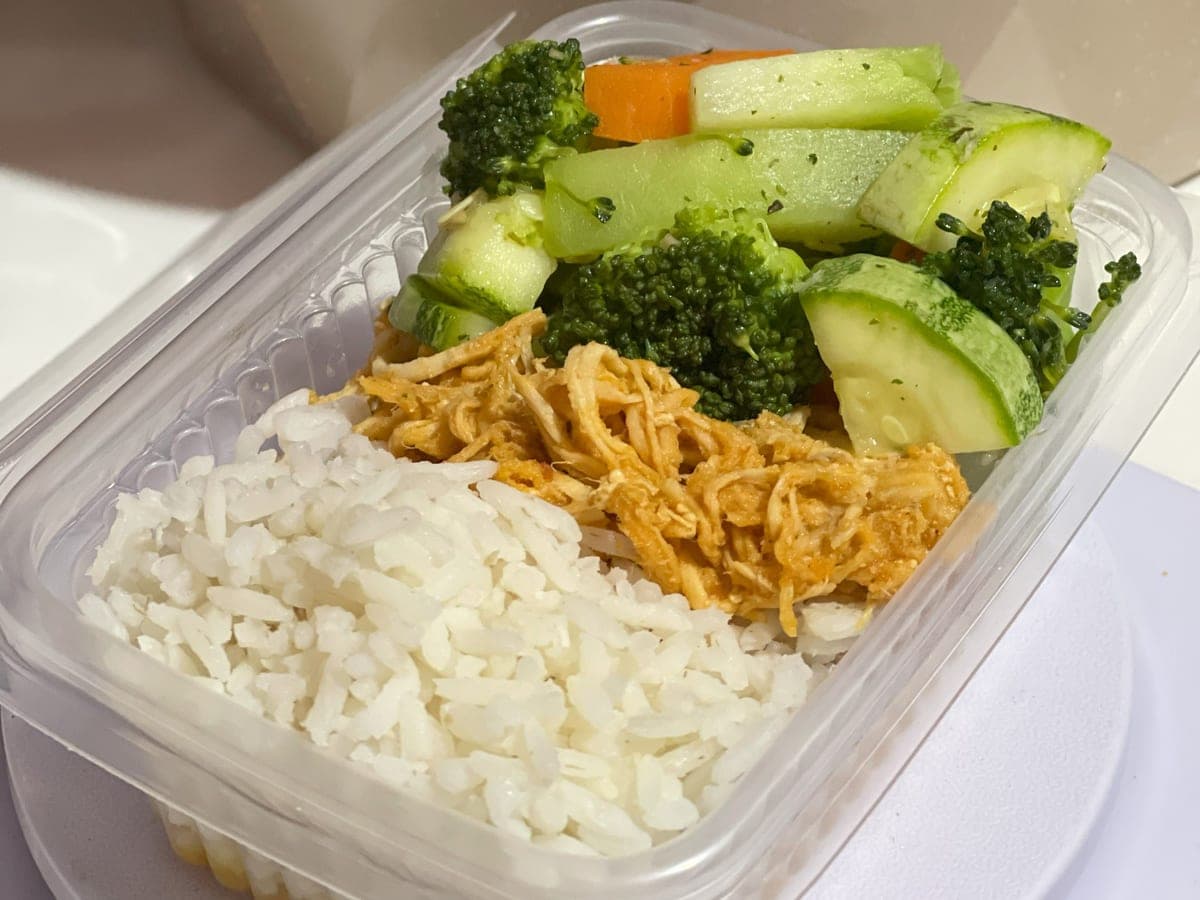
- Dry, compartment-friendly meals. Chicken, rice and roasted vegetables travel flat in a divided tray without any latch at all. The divided-tray case is made on the 3-compartment roundup.
When reusable is the right buy
- Anything with sauce that rides in a bag. Curry, chili, a dressing, a stew. This is the latch-and-gasket case and no press-on lid makes it.
- Lid-on reheating. Rubbermaid Brilliance's vents let you "microwave food splatter-free, without removing the lid"; every disposable tray is lid-off. If your break-room microwave is the office's only one, this saves you a paper towel and a queue.
- Oven reheating and stain-prone food. Glass goes into a preheated oven (Snapware's wording, lids off) and doesn't hold last week's tomato; thin polypropylene turns orange on the second chili and stays that way.
- You want a warranty on the part that wears. Lids fail first on every container ever made. Snapware covers its lids for life; Rubbermaid's lids are universal across the Brilliance line so a replacement is a purchase, not a hunt. No disposable maker offers either.
The two-set setup
The setup most people arrive at after a year, and the one we'd suggest starting with, is two sets doing two jobs. A latching set — glass if your containers live in a fridge and a microwave down the hall, vented plastic if they ride a bike — sized for the meals you carry yourself. And a sleeve of thin trays for the freezer, the giveaways and the days the good containers are in the dishwasher. The first set is ranked on best meal prep containers, the second on best disposable meal prep containers. Buy the sizes to match: a 4-cup tray and a 4-cup latching container hold the same lunch, so the portioning on what size meal prep containers do I need applies to both.
One rule for both sets: the fridge clock is the same. The USDA's leftovers guidance is 3 to 4 days refrigerated regardless of what the food is stored in, so a latching lid buys you a dry bag, not a longer week. If you prep for five days, days four and five go in the freezer on Sunday — in the cheap trays.
The picks this leads to
Our picks for this
Two reusable sets, the middle tier, and the disposable
 Stock photo
Best warranty on a latching lid
Snapware Total Solution Pyrex Glass 10-piece Set
Pyrex glass · 4 locking tabsMicrowaveOvenFreezer8.2/10The reusable case in one product: four locking tabs, a leak-proof claim, and a lifetime warranty on the lids — the part that fails.
Check price · Amazon#ad · Price set by Amazon · Disclosure for the link to Snapware Total Solution Pyrex Glass 10-piece Set
 Stock photo
Best plastic set
Rubbermaid Brilliance 10-piece Food Storage Set
StainShield plastic · latching lidMicrowaveFreezerDishwasher7.4/10The reusable plastic: latched, vented for lid-on reheating, StainShield against the chili stain, a fraction of the weight of glass.
Check price · Amazon#ad · Price set by Amazon · Disclosure for the link to Rubbermaid Brilliance 10-piece Food Storage Set
- Stock photo
Best divided set
Bentgo Prep 3-Compartment Containers (20-piece)
PFAS/BPA-free plastic · 3 compartmentsMicrowaveFreezerDishwasher6.1/10The middle: ten divided 4-cup trays at 3 oz each with a published care page — the disposable format built to last a year.
Check price · Amazon#ad · Price set by Amazon · Disclosure for the link to Bentgo Prep 3-Compartment Containers (20-piece)
- Stock photo
Best disposable
Freshware 3-Compartment Meal Prep Containers (21 pack, 24 oz)
PP · reusable/disposableMicrowaveFreezerDishwasher5.2/10The disposable: 21 trays rated microwave, freezer and dishwasher safe, for the freezer batch and the meals that don't come back.
Check price · Amazon#ad · Price set by Amazon · Disclosure for the link to Freshware 3-Compartment Meal Prep Containers (21 pack, 24 oz)
How Meal & Macro scores gear
Units we claim to have tested: 0
Plenty of sites say they packed every container on the list for a week. We didn't, and we say so. What we do instead: read the lid, material and care ratings the maker actually publishes and repeat its wording ("leak-proof", "oven safe to 450°F", "top-rack only"), do the container-fit and ice-pack arithmetic from published dimensions and the USDA's numbers, and score every pick on a public rubric for its category that weights the seal, the material and the fit first. Every figure links to where it came from; where the maker's page would not load we cite a retailer and say so.
Scores are editorial judgments from that documented research, not test results. Commissions never set a score or decide a pick. The rubrics and their weights are published.
Questions
Frequently asked
Can you reuse disposable meal prep containers?
Yes. Freshware rates its trays dishwasher, freezer and microwave safe; reuse them until the plastic scratches, clouds or warps, then retire that tray. No maker publishes a cycle count.
Are disposable meal prep containers microwave safe?
The ones on this site are, by their makers' own wording — lid off, and on medium power for oil-heavy food so a thin wall doesn't warp. Check the maker's page for any tray not listed here; "disposable" on its own guarantees nothing.
Are reusable meal prep containers worth it?
If you pack lunch most days and carry it in a bag, yes — the latch and gasket are what keep sauce off your laptop, and a lifetime lid warranty (Snapware) means the wearing part is covered. If you're still proving the habit, start with a multi-pack and upgrade the bag containers first.
Do reusable containers keep food fresh longer than disposable ones?
Not meaningfully for safety: the USDA's refrigerated leftovers window is 3 to 4 days whatever the container. An airtight latching lid slows drying and odor transfer; it doesn't extend the clock.
Which is better for the freezer, reusable or disposable?
For portions you'll eat within a few weeks, disposable flat trays stack better and cost less to dedicate to the freezer. For longer storage or liquids, a bag that seals (Stasher) or a portion tray (Souper Cubes) beats both — see the freezer containers roundup.
Keep reading
Related on Meal & Macro
- Best disposable meal prep containersThe multi-packs, ranked.
- Best meal prep containersThe reusable sets, ranked.
- Are plastic meal prep containers safe?The FDA's position and the rules that are yours.
- Glass vs plastic meal prep containersThe weight-versus-stain argument in full.
- Best meal prep containers for the freezerWhere the cheap trays and the sealing bags meet.
Receipts
Sources
- Freshware — 24 oz 3-Compartment PP containers page (box and cavity size, polypropylene, care) (checked 2026-09-21)
- Amazon listing — Freshware Meal Prep Containers 21 Pack 3 Compartment, 24 oz (compartment split, stated temperature range; retailer listing, labeled) (checked 2026-09-21)
- Bentgo — Prep 3-Compartment Containers 20-piece page (capacities, dimensions, materials, care) (checked 2026-09-21)
- Pyrex — Snapware Total Solution Pyrex Glass 10-piece set page (contents, 4 locking tabs, care, warranties) (checked 2026-09-21)
- Rubbermaid — Brilliance 10-Piece Set page (StainShield lids, universal lids, BPA-free, microwave/dishwasher/freezer; page blocked our reader, wording via the search index) (checked 2026-09-21)
- FDA — Bisphenol A (BPA): Use in Food Contact Application (checked 2026-09-21)
- USDA FSIS — Leftovers and Food Safety (3–4 days refrigerated, 2-hour rule, 40°F, 165°F reheat, shallow containers) (checked 2026-09-21)
- USDA FSIS — Freezing and Food Safety (0°F keeps food safe indefinitely; storage times are for quality) (checked 2026-09-21)
We don't own or use-test this gear and we don't pretend to. Materials, capacities, seals and care ratings come from the maker's own product pages (linked on every product) or, where the maker's page would not load, from a retailer listing we label as such. Food-safety numbers are quoted from the USDA and FDA pages linked above. Where a figure isn't published we say so. Prices are set by Amazon and change often, so we don't print them. Read the full method.