Shakers / Guide
Shaker bottle vs blender: which one your shake actually needs
A whisk ball handles whey in water. It does not handle frozen fruit, oats or a mass gainer. Here is the honest line between the two, and the battery-powered middle ground that covers most of the gap.
By Mike M.Updated Researched from maker spec pages
#adMeal & Macro earns from qualifying Amazon purchases and from brand partner programs. Prices are set by the retailer or the brand and change. A commission never decides a ranking. How we score · Disclosure
The line between them
The useful distinction is not "cheap versus expensive" or "gym versus kitchen". It is whether the thing you are mixing needs agitation or cutting.
A shaker agitates. A ball, a vortex wall or a small motor pushes liquid through powder until the clumps break up. That is a dissolving problem, and it is the problem most protein shakes actually are. A blender cuts — blades at speed turn solids into a suspension. Nothing a shaker does can reduce a strawberry.
What a shaker actually does
More than its reputation suggests, and the reputation comes from people using a bad one. A well-designed shaker handles:
- Whey or plant protein in water or milk. The core case, and a wire-ball bottle does it in about fifteen seconds.
- Creatine, electrolytes, pre-workout. Fine powders that want dispersing rather than suspending — the creatine-specific picks are on best shaker bottle for creatine.
- Clear or hydrolysed protein. Designed to dissolve, and the format that benefits most from a ball-free bottle — see best shaker bottle for clear protein.
- Casein, at a push. Thick, and the point at which a plain ball starts to struggle.
The technique matters more than most people assume — liquid first, powder second, and a few seconds of swirling before you shake hard. The full method is on how to mix protein powder without clumps.
Where only a blender works
Anything with structure. Frozen fruit, fresh banana, ice, rolled oats, spinach, nut butter, Greek yoghurt in quantity, and most high-calorie mass gainers, which are both thick and voluminous enough that a bottle cannot move the liquid through them.
This is not a shaker failing; it is a category boundary. A shaker that claimed to blend frozen fruit would be making something up. If your shake is a meal — oats, fruit, nut butter, protein — you own a blender problem, and no bottle on this site changes that. What a bottle can do is carry the result, which is a different and perfectly good job.
The electric middle ground
Battery-powered shakers sit between the two, and they are genuinely useful for a specific band: thick powders that a ball cannot handle but that do not contain solids. A small motor spinning an agitator does in ten seconds what shaking a casein by hand does badly in sixty.
What they are not is a portable blender. The motors are sized for agitation, not for cutting, and the makers do not claim otherwise. Treat them as an upgraded shaker rather than a downgraded blender — the field is ranked on best electric shaker bottle.
Side by side
| Shaker bottle | Electric shaker | Blender | |
|---|---|---|---|
| Powder in water or milk | Yes | Yes | Yes, and overkill |
| Thick casein or a gainer | Poorly | Well | Yes |
| Frozen fruit, oats, ice | No | No | Yes |
| Needs power | No | Battery or USB charge | Mains |
| Portable | Yes — it is the cup | Yes | No |
| Washing up | Bottle, lid, ball | Bottle, lid, agitator, motor base kept dry | Jug, lid, blade assembly, plus a cup |
| Time from start to drinking | Under a minute | Under a minute | Two to five minutes with cleanup |
| Best for | A shake at the gym or a desk | Thick powders away from a kitchen | A shake that is a meal |
The washing-up row is the one that quietly decides it for most people. A blender is four components and a separate drinking vessel; a shaker is the cup you drink from. Over a week that difference is larger than any mixing-quality argument — and it is why most people who own both still reach for the bottle on a training day. Keeping either from smelling is the same problem, covered on why does my shaker bottle smell.
What to buy
If the answer is a shaker, the choice is between a classic ball bottle, a battery-powered one for thick powders, and a ball-free design for anyone who finds the ball unpleasant.
Our picks for this
The three shaker formats
None of these blends. All three mix powder into liquid, and the difference is how thick a powder each will take.
Best all-round shaker
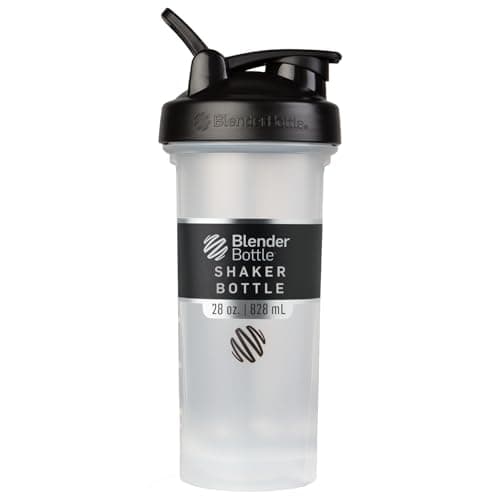
BlenderBottle Classic V2 (28 oz)
BPA-free plastic · wire whiskDishwasherLeak-resistant9.6/10The wire-ball default: 28 oz, which clears two scoops plus liquid with room to actually shake it.
$9.99BlenderBottle#ad · Price as of November 9, 2026 · Disclosure for the link to BlenderBottle Classic V2 (28 oz)
Best big electric shaker
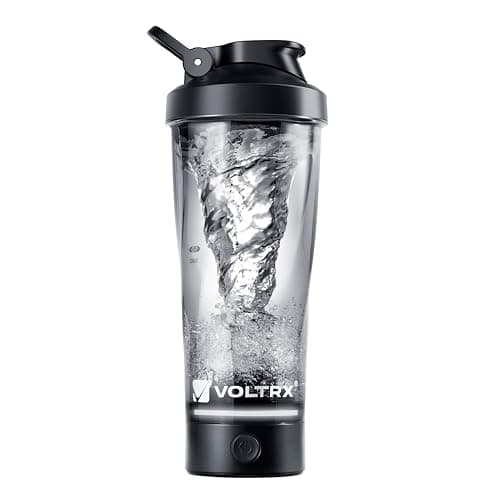
VOLTRX VortexBoost Electric Shaker (24 oz)
Electric · Tritan · USB-CDishwasher9.0/10Battery-powered agitation for thick casein and gainers, where a ball alone leaves lumps.
$23.39VOLTRX VortexBoost#ad · Price as of November 9, 2026 · Disclosure for the link to VOLTRX VortexBoost Electric Shaker (24 oz)
Best locking-cap shaker
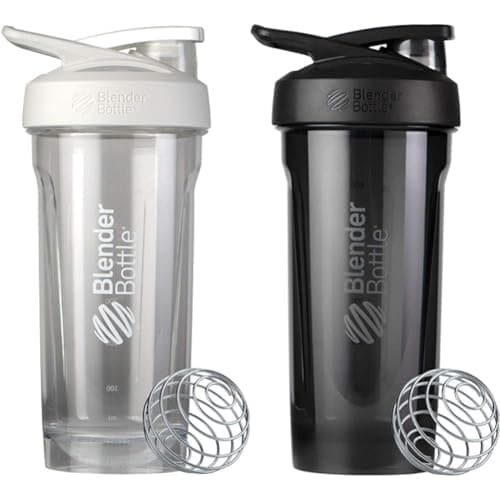
BlenderBottle Strada Tritan (28 oz, 2-pack)
Eastman Tritan · locking capDishwasherLeak-resistant9.8/10The locking-lid version, for a bottle that travels in a bag rather than a cupholder.
$36.98BlenderBottle#ad · Price as of November 9, 2026 · Disclosure for the link to BlenderBottle Strada Tritan (28 oz, 2-pack)
How Meal & Macro picks gear
Researched, compared and scored
Every pick starts with the maker's own product page and manual: the lid, material and care ratings in its exact wording ("leak-proof", "oven safe to 450°F", "top-rack only"), the container-fit and ice-pack arithmetic worked out from published dimensions and the USDA's numbers, and a score on a public rubric for the category that weights the seal, the material and the fit first. Models are compared side by side, so each page lands on one clear pick per use case with the reason stated. Every figure links to where it came from; where the maker's page would not load we cite a retailer and say so.
Scores are editorial judgments built from that documented research. Commissions never set a score or decide a pick. The rubrics and their weights are published.
Questions
Frequently asked
Can you use a shaker bottle instead of a blender?
For powder in water or milk, yes — that is what a shaker is for. For anything containing frozen fruit, ice, oats or nut butter, no: a shaker agitates and a blender cuts, and nothing a shaker does will reduce a solid.
Does a shaker bottle mix protein as well as a blender?
For standard whey in liquid the result is essentially the same, and the shaker is faster and produces far less washing up. For thick casein or a mass gainer a blender is noticeably better, and an electric shaker covers most of that gap.
Can a shaker bottle mix a banana or frozen fruit?
No. That needs blades. A shaker can carry the blended result, which is a reasonable way to use both.
Is an electric shaker bottle a portable blender?
No, and the makers do not market it as one. The motor drives an agitator sized for dispersing powder, not a blade assembly for cutting solids. It is an upgraded shaker.
Which is better for meal replacement shakes?
It depends on the formula. A thin meal-replacement powder mixes fine in a shaker; a thick high-calorie gainer wants a motor, electric or mains. The Huel-specific answer is on best shaker bottle for Huel.
Keep reading
Related on Meal & Macro
Receipts
Sources
- BlenderBottle — Classic V2 page (20/28/45 oz, BlenderBall whisk, leakproof, dishwasher safe, dimensions, limited lifetime guarantee) (checked 2026-09-21)
- BlenderBottle — FAQ (all pieces dishwasher safe; BlenderBall in the silverware bin) (checked 2026-09-21)
- VOLTRX — VortexBoost page (24 oz, BPA-free Tritan, 1000 mAh, USB-C 2-hour charge, IPX5 base, cup dishwasher / base not) (checked 2026-09-21)
- BlenderBottle — Strada Tritan page (24/28 oz, Eastman Tritan, push-button lockable flip cap, top-rack dishwasher) (checked 2026-09-21)
Materials, capacities, seals and care ratings come from the maker's own product pages and manuals (linked on every product) or, where the maker's page would not load, from a retailer listing we label as such. Food-safety numbers are quoted from the USDA and FDA pages linked above. Where a figure isn't published we say so. Amazon sets the prices and changes them often, so the button on every pick checks today's. Read the full method.