Scales / Guide
How to measure portions without a scale: four methods that actually repeat
No scale in the kitchen, or no patience for one. These are the four portioning methods that still produce five identical boxes, ranked by how much accuracy each one costs you.
By Mike M.Updated Researched from maker spec pages
#adMeal & Macro earns from qualifying Amazon purchases and from brand partner programs. Prices are set by the retailer or the brand and change. A commission never decides a ranking. How we score · Disclosure
What you are actually trying to achieve
There are two different goals hiding behind "measuring portions", and they need different answers. One is accuracy — knowing the true weight of what is on the plate. The other is consistency — making sure Thursday's box is the same size as Monday's.
Only a scale delivers the first. All four methods below deliver the second, which for most people prepping meals is the one that changes outcomes. A portion that is ten percent off but identical five days running is a far better basis for adjusting your week than five portions that averaged correctly.
1. A fixed-volume container
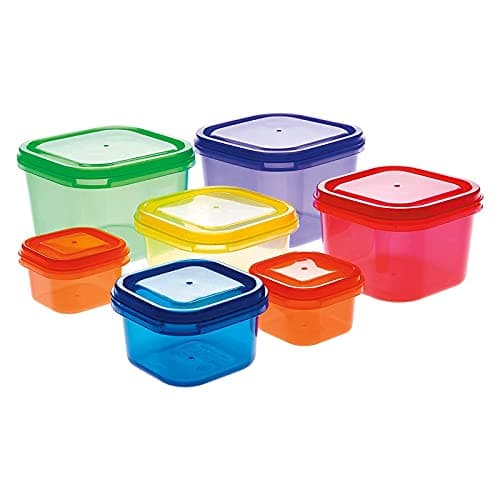
The most reliable no-scale method. Take a container whose capacity the maker publishes, fill it the same way every time — levelled, not heaped — and tip it into the box. The colour-coded portion kits exist precisely to sell this as a system, with a different published volume for each food group; the sizes are listed on portion control container sizes explained.
Accuracy cost: density. The same container holds very different masses of rice and of spinach, and how firmly you press changes the answer for anything shreddable. Fine for grains and chopped vegetables, weakest for shredded protein and anything sticky.
How to improve it for free: borrow a scale once. Fill your container with the four or five foods you prep regularly, weigh each, write the numbers on a card inside the cupboard door. From then on you are running a volume system with real weights behind it.
2. A divided tray
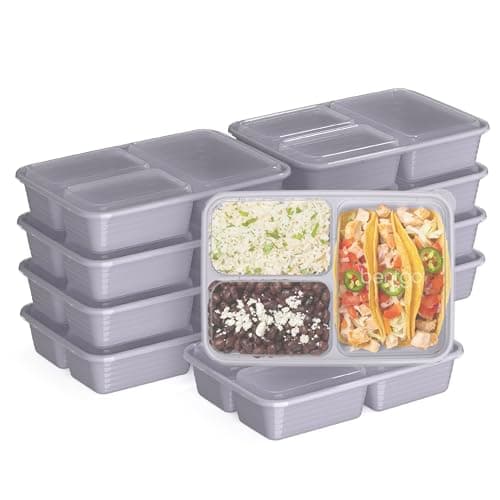
A three-compartment container does not measure quantity at all — it fixes proportion. Protein in the big section, starch and vegetable in the two smaller ones, and the plate composes itself. The thing it stops is the specific failure where the starch quietly expands to fill whatever space is left.
Accuracy cost: total amount. A tray tells you the shape of the meal, not its size, so two people filling the same tray can land a long way apart. Pair it with a published capacity and it gets much better — the trays and their maker-stated volumes are ranked on best 3-compartment meal prep containers.
3. The hand method
A palm of protein, a cupped hand of carbohydrate, a thumb of fat, a fist of vegetables. It is the method every coach reaches for because the measuring device is always with you, and it is genuinely useful away from your own kitchen — a restaurant, a canteen, someone else's house.
Accuracy cost: the most of the four, and it scales with your hands rather than with your requirements. Treat it as a travel method rather than a prep method: good enough to keep a week from going sideways, not good enough to build five identical boxes on.
4. The pack-split
The one people overlook, and the most accurate thing you can do without owning a scale. The package already carries a verified net weight, so dividing it evenly turns that printed number into your portion. A 2 lb pack of chicken split into five boxes is 6.4 oz per box, and you did no measuring at all — you just cut carefully.
Accuracy cost: only your knife. It works best for proteins sold by weight, and it is how most experienced preppers handle the single most important line on the plate. The same logic applies to a dry package: a 1 kg bag of rice divided into ten equal cooks is 100 g per cook, no cup required.
The catch: raw packaged weight is raw. If you log it, log it against the raw entry, or weigh after cooking and log the cooked entry — never one against the other. That rule is on weigh food cooked or raw.
What to buy for each
None of this needs a scale. Two of the three below are the measure itself; the third is there for the day you decide the lookup table is worth having.
Our picks for this
The three things that make a no-scale method work
A published volume, a fixed proportion, and — optionally, once — a way to find out what your container actually holds.
Best portion kit
BODi 21 Day Fix Portion Control Containers (7-piece)
Color-coded portion kitMicrowaveDishwasher8.7/10Seven containers with published volumes, one per food group. The fixed-volume method, bought as a system.
$9.95BODi 21 Day Fix#ad · Price as of November 9, 2026 · Disclosure for the link to BODi 21 Day Fix Portion Control Containers (7-piece)
Best divided set
Bentgo Prep 3-Compartment Containers (20-piece)
PFAS/BPA-free plastic · 3 compartmentsMicrowaveFreezerDishwasher8.9/10The divided tray: it fixes the proportion of the plate so the starch cannot expand into the leftover space.
$12.53Bentgo Prep 3-Compar#ad · Price as of November 9, 2026 · Disclosure for the link to Bentgo Prep 3-Compartment Containers (20-piece)
Best slim budget scale
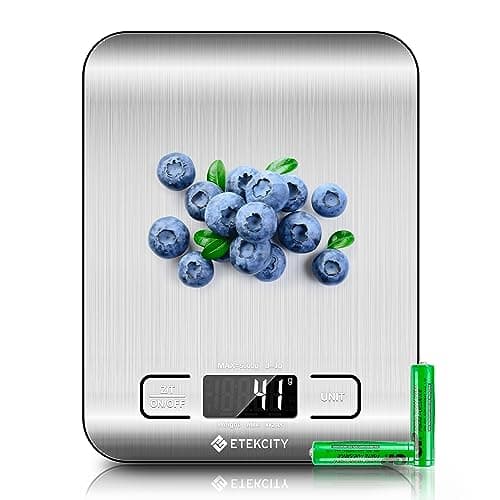
Etekcity EK6015 Digital Kitchen Scale
1 g · 11 lb · 0.6 in slim9.0/10Optional, and only needed once: weigh what your container holds for the foods you prep, then put it away.
$13.99Etekcity EK6015#ad · Price as of November 9, 2026 · Disclosure for the link to Etekcity EK6015 Digital Kitchen Scale
How Meal & Macro picks gear
Researched, compared and scored
Every pick starts with the maker's own product page and manual: the lid, material and care ratings in its exact wording ("leak-proof", "oven safe to 450°F", "top-rack only"), the container-fit and ice-pack arithmetic worked out from published dimensions and the USDA's numbers, and a score on a public rubric for the category that weights the seal, the material and the fit first. Models are compared side by side, so each page lands on one clear pick per use case with the reason stated. Every figure links to where it came from; where the maker's page would not load we cite a retailer and say so.
Scores are editorial judgments built from that documented research. Commissions never set a score or decide a pick. The rubrics and their weights are published.
Questions
Frequently asked
How do I measure food portions without a scale?
Use a measure that does not change: a container with a published volume, filled the same way every time. For protein, divide a whole package by the number of boxes — the printed net weight does the measuring for you.
Is the hand method accurate enough for meal prep?
It is a travel method rather than a prep method. It keeps a meal eaten away from home roughly in line, but it scales with your hands and is too variable to build five matching boxes on.
Can I use measuring cups instead?
Yes — a cup is a fixed-volume container, which is method one. It has the same density blind spot as any volume measure; the detail is on food scale vs measuring cups.
What is the most accurate way to portion without weighing?
Splitting a whole package evenly. The net weight is already printed and verified, so dividing it transfers that number to your boxes without any measuring on your part.
Do I ever need to buy a scale?
Only if you log macros into an app, which wants grams. Even then, one session with a borrowed scale to calibrate your containers gets you most of the way — the case either way is on is a food scale worth it.
Keep reading
Related on Meal & Macro
Receipts
Sources
- BODi — Portion Control 7-Piece Container Kit page (colors, BPA/DEHP-free, top-rack dishwasher, nesting) (checked 2026-09-21)
- Bentgo — Prep 3-Compartment Containers 20-piece page (capacities, dimensions, materials, care) (checked 2026-09-21)
- USDA FoodData Central (nutrient database used for raw vs cooked yields) (checked 2026-09-21)
- Etekcity — EK6015 Digital Kitchen Scale page (176 oz / 11 lb / 5000 g capacity, five units, 120-second display auto-off, 2 × AAA, dimensions, 2-year limited warranty, list price) (checked 2026-09-26)
Materials, capacities, seals and care ratings come from the maker's own product pages and manuals (linked on every product) or, where the maker's page would not load, from a retailer listing we label as such. Food-safety numbers are quoted from the USDA and FDA pages linked above. Where a figure isn't published we say so. Amazon sets the prices and changes them often, so the button on every pick checks today's. Read the full method.