Scales / Guide
Food scale vs measuring cups: when the cup is fine and when it is lying to you
A cup measures space, a scale measures mass, and the gap between them is density. Here is where cups are perfectly adequate, where they quietly mislead, and what that costs a log over a week.
By Mike M.Updated Researched from maker spec pages
#adMeal & Macro earns from qualifying Amazon purchases and from brand partner programs. Prices are set by the retailer or the brand and change. A commission never decides a ranking. How we score · Disclosure
The one difference that matters
A measuring cup is a container of a defined size. When it is full, it holds that volume, and that is a true and useful fact. What it cannot tell you is how much food is in that volume, because that depends on density and on how firmly the food was pressed in.
Water is the reason this feels counter-intuitive. For water, volume and weight march together almost exactly, so a cup of water is a reliable quantity. Food is not water. Packed brown sugar and the same cup of loose flour are not the same mass, and neither is a cup of rice you levelled off against a cup you heaped.
When cups are genuinely fine
Plenty of the time, and anyone telling you to throw the cups out is overselling. Cups do a good job when:
- You are measuring a liquid. Milk, stock, oil in quantity. Volume and mass stay close enough, and a jug is faster than a tared bowl.
- You are not logging it. If the goal is "about this much rice, the same every week", a cup delivers exactly that. Consistency is the actual objective in meal prep, and a cup is consistent with itself.
- You always prepare the food the same way. A cup of your rice, cooked your way, levelled your way, is a repeatable portion even if it is not a known weight.
- You are baking by an American recipe. The recipe was written in cups; converting it to grams introduces more error than it removes unless the author gave you weights.
The three cases where cups fail
1. Anything compressible. Shredded chicken, chopped leaves, grated cheese, oats, nut butter. How hard you press decides the portion, and nobody presses identically twice. This is the case that matters most in meal prep, because shredded protein is exactly what a Sunday batch produces.
2. Anything you are logging as a macro. Tracking apps hold their entries in grams, drawn from reference data like USDA FoodData Central. Entering "1 cup" makes the app guess a weight for you, which is a guess layered on your guess. If protein is the number you care about, weigh it — how to use a food scale for macros is the method.
3. Small, dense, high-calorie things. Oil, peanut butter, nuts, cheese. The error on a tablespoon is proportionally large and the calories per gram are high, so this is where cups do the most damage per unit of effort. A scale reading to 1 g settles it in one press.
There is a fourth, half-case: anything where the cooked-versus-raw distinction applies. A cup of cooked rice and a cup of dry rice are different foods in a database, and the cup gives you no prompt to notice — weigh food cooked or raw has the rule.
What it costs over a week
Here is the honest version, without a scare number. If you portion five lunches a week with a cup and your packing varies, the variation lands mostly on the starch and the protein — the two biggest contributors on the plate. Across five boxes that is the difference between five identical meals and five meals that drift. Whether that matters depends entirely on what you are doing: for a deficit tracked to the calorie it matters; for "eat properly at work" it does not.
Which is why the recommendation on this site is not "always weigh". It is: decide what you are tracking, then pick the instrument that answers it and use only that one. The same argument with containers instead of cups is on portion control containers vs a food scale, and the case for owning a scale at all is on is a food scale worth it.
If you decide on a scale
Three that cover the range: one with the app that does the macro arithmetic, one plain scale with a display a bowl cannot hide, and one basic unit for a drawer.
Our picks for this
The scales that replace the cup
All three read in 1 g steps and tare in one press. The difference is what happens to the number after that.
Best macro scale for the money
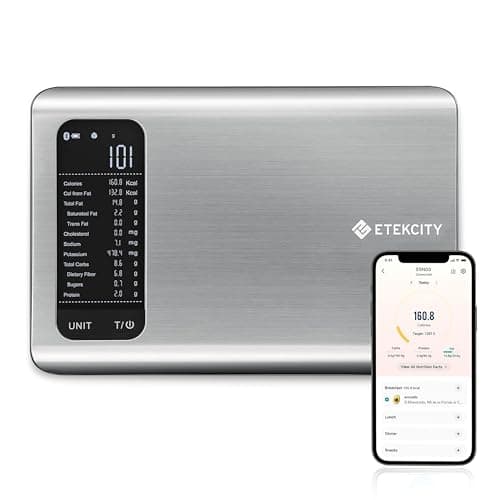
Etekcity ESN00 Smart Nutrition Scale
1 g · 11 lb · VeSync appApp sync9.5/10The app does the macro arithmetic and syncs it out, which is the whole point if you log.
$39.99Etekcity ESN00#ad · Price as of November 9, 2026 · Disclosure for the link to Etekcity ESN00 Smart Nutrition Scale
Best plain scale
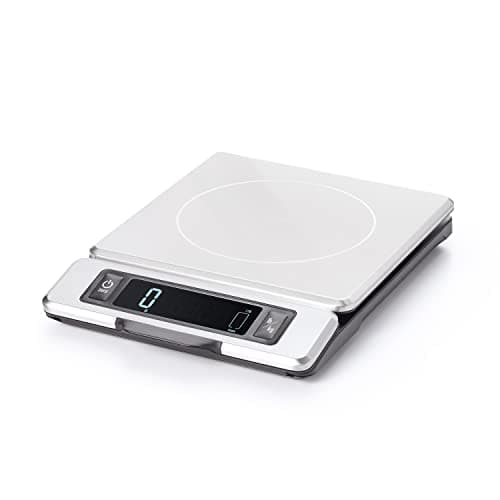
OXO Good Grips 11 lb Stainless Steel Food Scale with Pull-Out Display
1 g · 11 lb · pull-out display9.1/10Plain and durable, with a pull-out display so a mixing bowl cannot sit on top of the reading.
$51.99OXO Good Grips 11#ad · Price as of November 9, 2026 · Disclosure for the link to OXO Good Grips 11 lb Stainless Steel Food Scale with Pull-Out Display
Best slim budget scale
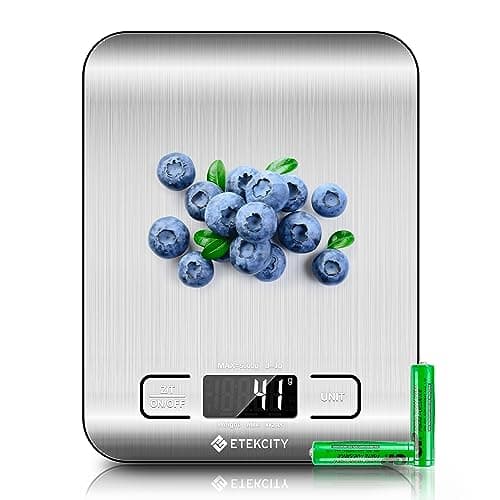
Etekcity EK6015 Digital Kitchen Scale
1 g · 11 lb · 0.6 in slim9.0/10The drawer scale: weigh, tare, convert units, done. The cheapest way to stop guessing.
$13.99Etekcity EK6015#ad · Price as of November 9, 2026 · Disclosure for the link to Etekcity EK6015 Digital Kitchen Scale
How Meal & Macro picks gear
Researched, compared and scored
Every pick starts with the maker's own product page and manual: the lid, material and care ratings in its exact wording ("leak-proof", "oven safe to 450°F", "top-rack only"), the container-fit and ice-pack arithmetic worked out from published dimensions and the USDA's numbers, and a score on a public rubric for the category that weights the seal, the material and the fit first. Models are compared side by side, so each page lands on one clear pick per use case with the reason stated. Every figure links to where it came from; where the maker's page would not load we cite a retailer and say so.
Scores are editorial judgments built from that documented research. Commissions never set a score or decide a pick. The rubrics and their weights are published.
Questions
Frequently asked
Is a food scale more accurate than measuring cups?
For food, yes. A cup measures volume, so density and packing change how much food is in it. A scale measures mass directly and is unaffected by either.
Can I use measuring cups for meal prep instead of a scale?
Yes, and for many people it is the better choice. A cup is consistent with itself, which is what makes five boxes the same size. It just will not give you a number an app can log.
How many grams is a cup of rice?
It depends on the rice and on whether it is dry or cooked, which is exactly the problem. The reliable answer is to fill your cup with your rice and weigh it once, then reuse that number.
Do I need a scale to count calories?
Not strictly, but entering volumes makes the app estimate a weight on your behalf, so the error compounds. If calories are the number you are acting on, a 1 g scale removes one of the two guesses.
What about liquids — scale or jug?
A jug is fine for water, milk and stock. For oil, a scale is better: the volumes are small, the calories per gram are high, and a tablespoon poured by eye is the single easiest place to lose track of a few hundred calories a week.
Keep reading
Related on Meal & Macro
Receipts
Sources
- USDA FoodData Central (nutrient database used for raw vs cooked yields) (checked 2026-09-21)
- Etekcity — ESN00 Smart Nutrition Scale page (capacity, graduation, units, platform, batteries, VeSync + Nutritionix, sync, warranty) (checked 2026-09-21)
- OXO — 11 lb Stainless Steel Food Scale with Pull-Out Display page (1 g / 0.1 oz, dimensions, weight, 4 AAA; page blocked our reader, wording via the search index) (checked 2026-09-21)
- Etekcity — EK6015 Digital Kitchen Scale page (176 oz / 11 lb / 5000 g capacity, five units, 120-second display auto-off, 2 × AAA, dimensions, 2-year limited warranty, list price) (checked 2026-09-26)
Materials, capacities, seals and care ratings come from the maker's own product pages and manuals (linked on every product) or, where the maker's page would not load, from a retailer listing we label as such. Food-safety numbers are quoted from the USDA and FDA pages linked above. Where a figure isn't published we say so. Amazon sets the prices and changes them often, so the button on every pick checks today's. Read the full method.