Scales / Head to head
Portion control containers vs a food scale: which portion method to commit to
One measures space, the other measures mass, and they disagree the moment a food is dense or fluffy. Here is where each is right, where each quietly misleads, and why owning both is the worst option.
By Mike M.Updated Researched from maker spec pages
#adMeal & Macro earns from qualifying Amazon purchases and from brand partner programs. Prices are set by the retailer or the brand and change. A commission never decides a ranking. How we score · Disclosure
The contenders
Side by side
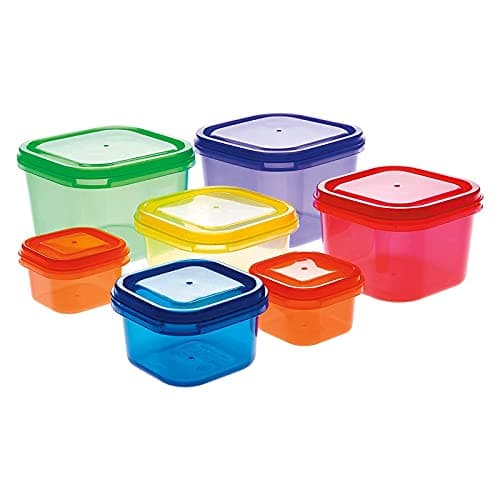
If you want a shape
BODi 21 Day Fix Portion Control Containers (7-piece)
Color-coded portion kitMicrowaveDishwasher8.7 /10Published container volumes that turn a portion into a colour. No batteries, no reset, no decision at the plate — and no grams for an app.
$9.95BODi 21 Day Fix#ad · Price as of November 9, 2026 · Disclosure for the link to BODi 21 Day Fix Portion Control Containers (7-piece)
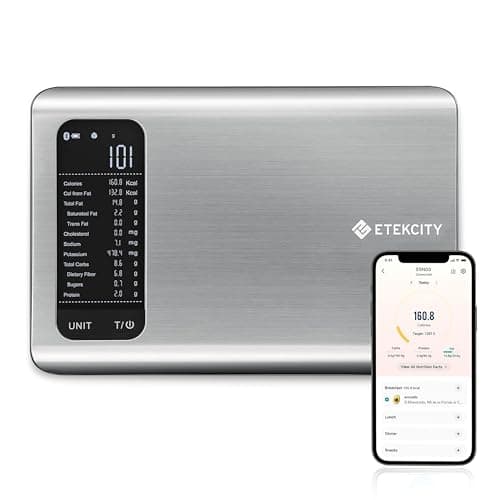
If you want a number
Etekcity ESN00 Smart Nutrition Scale
1 g · 11 lb · VeSync appApp sync9.5 /101 g graduation to 11 lb with an app that converts the weight to macros. Exact and food-agnostic, at the cost of a tare press per ingredient.
$39.99Etekcity ESN00#ad · Price as of November 9, 2026 · Disclosure for the link to Etekcity ESN00 Smart Nutrition Scale
What each one measures
A portion container measures volume. Its claim is that the container is a known, published size, so filling it is the measurement. Nothing is reset, nothing is logged, and the portion is a colour rather than a figure. The full set of published sizes sits on portion control container sizes explained.
A food scale measures mass. It does not care what shape the food is, how tightly it is packed, or whether it is a leaf or a grain. It gives a number, and that number is what every tracking app actually wants. What a 1 g graduation does and does not promise is covered on how accurate are food scales.
Where volume and weight disagree
They disagree on density, and the gap is not small. A cup of raw spinach and a cup of cooked white rice take up exactly the same space in exactly the same container, and nobody would call them the same portion. The container is doing its job correctly in both cases — it is a cup, and it held a cup. It simply has no way to know which food went in.
That is fine for the foods the kits were designed around, where the volumes were chosen to land on sensible amounts. It stops being fine for anything you pack tightly, anything you chop finely, and anything with a lot of air in it. The scale has the opposite failure mode: it is right about the mass and silent about whether you logged it against the matching database entry, which is the mistake set out on weigh food cooked or raw.
Side by side
| Portion containers | Food scale | |
|---|---|---|
| What it measures | Volume, as a published container size | Mass, in grams or ounces |
| Accurate on dense foods | No — a packed cup and a loose cup read the same | Yes — density is irrelevant |
| Gives a number an app can log | No, unless you convert it yourself | Yes, directly |
| Speed at the plate | Fast: fill and tip | Slower: tare, add, read, repeat |
| Needs power | No | Batteries or USB charging |
| Works for liquids and oils | Poorly — small volumes, awkward pour | Yes, to the gram |
| Dishwasher | Yes, as the maker rates them | Not immersible; wipe only |
| Best for | Composing a plate without thinking | Logging macros into an app |
Which one to commit to
Take the containers if your goal is a repeatable plate rather than a spreadsheet: you want lunch to be the same size every day, you are not logging into an app, and you want the decision made at the drawer rather than the counter. They are also the better answer for anyone who finds that weighing food turns eating into a chore — a system you keep using beats a more precise one you abandon.
Take the scale if an app is involved, if you track protein specifically, if you cook in bulk and portion from a tray, or if oils and sauces are a meaningful part of what you eat. It is also the only one of the two that scales down cleanly to supplements and up cleanly to a 2 kg batch of chicken.
If you genuinely want both — and plenty of people end up here — use the container as the measure and the scale once, to find out what that container holds for the three or four foods you prep most. Write the numbers down. After that you are using a volume system with a weight-derived lookup table, which is the best of it. The full kit decision for a deficit is on meal prep for weight loss.
In detail
The contenders, in full
If you want a shape
BODi 21 Day Fix Portion Control Containers (7-piece)
Published container volumes that turn a portion into a colour. No batteries, no reset, no decision at the plate — and no grams for an app.
EvidenceResearched · maker-sourced
The rubric behind the 8.7
Criterion marks are the rubric assessment on its own 0–10 scale. The published score is that weighted result on our 8.4–9.8 recommendation scale — how we score.
- Seal & leak design (25%)
- 3
- Material & thermal range (25%)
- 5
- Lid longevity & replacement availability (15%)
- 5
- Stack / nest footprint (15%)
- 9
- Dishwasher & stain resistance (10%)
- 7
- Value (10%)
- 8
Why we recommend it
- Portion by container instead of by scale on nights you can't face a scale
- Nests into a single stack
- The capacities are published, so the system works with any plan, not only the one it was sold with
Good to know
- No leak-proof claim — these aren't for carrying
- Seven small containers; you still need real meal containers
- The color scheme is tied to one program's food groups
Choose a different pick if…
…you already weigh in grams — a 1 g scale is more precise than a cup, and cheaper than a kit plus a scale.
#ad · Price as of November 9, 2026 · Disclosure for the link to BODi 21 Day Fix Portion Control Containers (7-piece)
If you want a number
Etekcity ESN00 Smart Nutrition Scale
1 g graduation to 11 lb with an app that converts the weight to macros. Exact and food-agnostic, at the cost of a tare press per ingredient.
EvidenceResearched · maker-sourced
The rubric behind the 9.5
Criterion marks are the rubric assessment on its own 0–10 scale. The published score is that weighted result on our 8.4–9.8 recommendation scale — how we score.
- Resolution & capacity (25%)
- 7
- Nutrition database / app sync (25%)
- 9
- Tare & unit handling (15%)
- 8
- Platform size & readability (15%)
- 8
- Battery / charging (10%)
- 5
- Value (10%)
- 10
Why we recommend it
- A million-food database and Apple Health sync at a basic-scale price
- 9.2 × 6.3 in platform fits a dinner plate
- 2-year warranty
Good to know
- 1 g graduation, not 0.1 g — fine for chicken, coarse for creatine
- AAA batteries, not rechargeable
- 120-second auto-off is short when you're portioning five containers
Choose a different pick if…
…you weigh supplements or oils in single-digit grams — you want 0.1 g graduation, which this doesn't have.
#ad · Price as of November 9, 2026 · Disclosure for the link to Etekcity ESN00 Smart Nutrition Scale
How Meal & Macro picks gear
Researched, compared and scored
Every pick starts with the maker's own product page and manual: the lid, material and care ratings in its exact wording ("leak-proof", "oven safe to 450°F", "top-rack only"), the container-fit and ice-pack arithmetic worked out from published dimensions and the USDA's numbers, and a score on a public rubric for the category that weights the seal, the material and the fit first. Models are compared side by side, so each page lands on one clear pick per use case with the reason stated. Every figure links to where it came from; where the maker's page would not load we cite a retailer and say so.
Scores are editorial judgments built from that documented research. Commissions never set a score or decide a pick. The rubrics and their weights are published.
Questions
Frequently asked
Are portion control containers as accurate as a food scale?
No. They measure volume, so two foods of different density fill the same container at very different weights. For a plate you want to repeat that is usually close enough; for a macro log it is not.
Can you use portion containers and a food scale together?
Yes, and the useful way to do it is once rather than daily: weigh what your container holds for each food you prep regularly, write it down, then use the container alone. You end up with volume speed and weight accuracy.
Which is better for weight loss?
Whichever you will still be using in week six. The deficit is driven by consistency of portion, not by the instrument — the fuller argument is on meal prep for weight loss.
Do portion control containers work without the programme they came with?
Yes. The containers are published volumes; the eating plan sold alongside them is separate. Plenty of people use the kit purely as a set of known-size measures.
Is a food scale worth it if I already have measuring cups?
It depends what you log. Cups and a scale have the same volume-versus-mass split — food scale vs measuring cups works that one through.
Keep reading
Related on Meal & Macro
- Food scale vs measuring cupsThe same volume-versus-weight split, with cups.
- Portion container sizes explainedWhat each colour holds, as published.
- Best portion control containersThe kits ranked on size set and seal.
- Best food scale for weight lossThe scales ranked for calorie tracking.
- Meal prep for weight lossWhere the portion method fits in the whole kit.
Receipts
Sources
- BODi — Portion Control 7-Piece Container Kit page (colors, BPA/DEHP-free, top-rack dishwasher, nesting) (checked 2026-09-21)
- BODi blog — Understanding the 21 Day Fix Containers (container capacities by color) (checked 2026-09-21)
- Etekcity — ESN00 Smart Nutrition Scale page (capacity, graduation, units, platform, batteries, VeSync + Nutritionix, sync, warranty) (checked 2026-09-21)
- USDA FoodData Central (nutrient database used for raw vs cooked yields) (checked 2026-09-21)
Materials, capacities, seals and care ratings come from the maker's own product pages and manuals (linked on every product) or, where the maker's page would not load, from a retailer listing we label as such. Food-safety numbers are quoted from the USDA and FDA pages linked above. Where a figure isn't published we say so. Amazon sets the prices and changes them often, so the button on every pick checks today's. Read the full method.