Shakers / Head to head
BlenderBottle vs Stanley: a whisk that mixes against a strainer that filters
These two bottles do not do the same thing. BlenderBottle breaks powder up with a wire ball; Stanley keeps lumps out of your mouth with a strainer, and insulates the drink for eight hours. Which is right depends entirely on what you put in it.
By Mike M.Updated Spec-page researched, not used by us
#adMeal & Macro earns from qualifying Amazon purchases. Prices are set by the retailer and change. A commission never decides a ranking. How we score · Disclosure
The contenders
Side by side
 Stock photo
Mixes thick powder
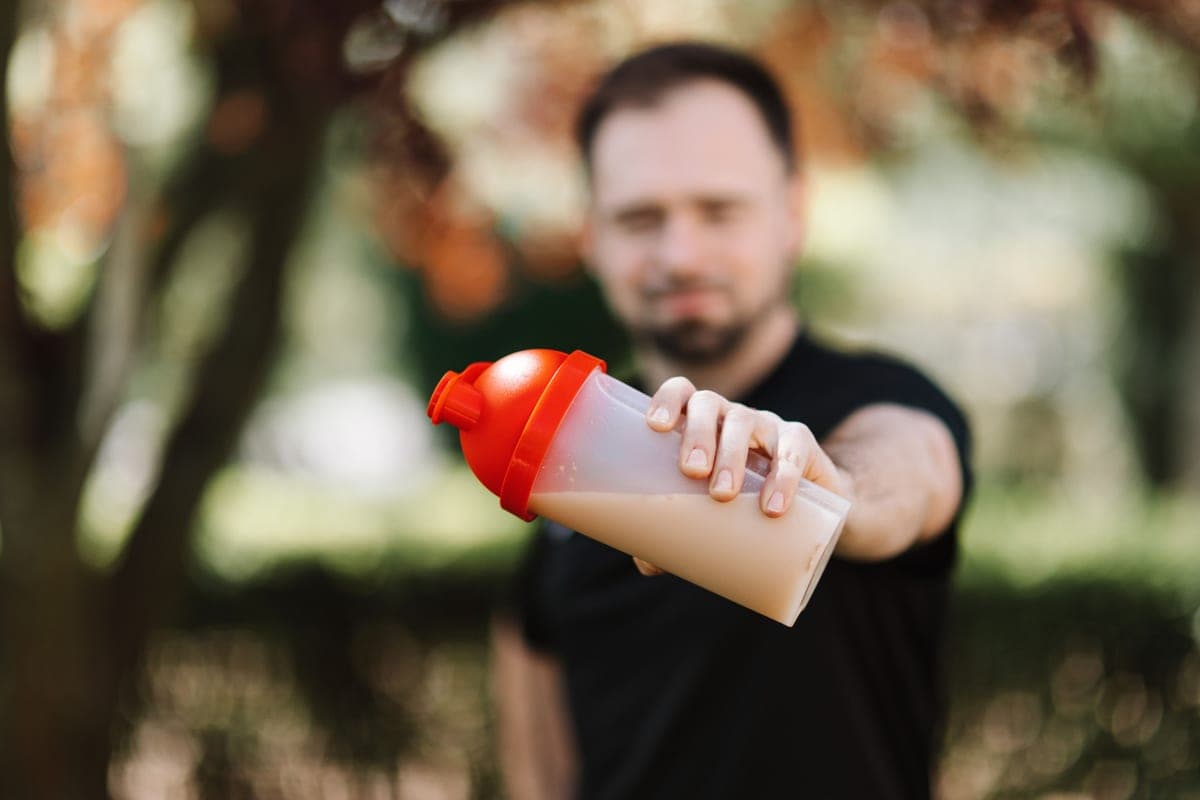
BlenderBottle Classic V2 (28 oz)
BPA-free plastic · wire whiskDishwasherLeak-resistant8.1 /10The default shaker, and the maker's page backs the reputation: a stainless wire-whisk ball, a leakproof claim, all parts dishwasher safe, measurement markings and a limited lifetime guarantee. 28 oz clears the two-scoop math with room to shake.
Check price · Amazon#ad · Price set by Amazon · Disclosure for the link to BlenderBottle Classic V2 (28 oz)
 Stock photo
Insulated, carries powder
Stanley Vitalize Shaker Bottle (20 oz)
18/8 steel · 3 oz powder base · 8 h coldInsulatedDishwasherLeak-resistant7.4 /10Stanley's answer to the shaker: 18/8 recycled steel, double-wall insulated for 8 hours cold, a leakproof Tritan lid with a removable strainer instead of a ball — and a 3 oz screw-on base container that carries the scoop you haven't mixed yet.
Check price · Amazon#ad · Price set by Amazon · Disclosure for the link to Stanley Vitalize Shaker Bottle (20 oz)
The verdict
Whisk ball against strainer
This is the whole comparison, and the two makers describe their own mechanisms plainly enough that you do not have to take anyone's word for it.
BlenderBottle's page names a "BlenderBall wire whisk" in a bottle with a "rounded base". The ball is loose steel: it travels through the liquid as you shake, and the wire loops shear clumps apart. That is an active mixing device, and it is why the Classic has been the default gym bottle for fifteen years.
Stanley's page names a "removable strainer" in the lid, alongside a "fast flow drink spout". A strainer is a filter, not a mixer. It sits between the liquid and your mouth and holds back any clumps that did not dissolve — which is a genuinely useful thing if your powder mostly dissolves and an entirely different thing from breaking a clump up. Shake a scoop of casein in the Vitalize and the lumps stay lumps; they just stay in the bottle instead of arriving in your mouth.
If mixing is the problem you are solving, the third option is a motor rather than either of these, and that field is on best electric shaker bottle. The whisk-free vortex approach is on BlenderBottle vs Helimix.
28 oz against 20 oz
BlenderBottle publishes the Classic in 20, 28 and 45 oz. Stanley publishes the Vitalize at 20 oz, plus the 3 oz base container.
Do the two-scoop arithmetic: two scoops of whey plus 12 oz of liquid is around 15 oz of contents before you shake. In 28 oz that leaves 13 oz of air to move the ball through, which is what makes the mixing work. In 20 oz it leaves 5 oz, which is a bottle you slosh rather than shake. So the Vitalize is a one-scoop bottle by volume as well as by mechanism — and that is not a flaw if one scoop, or a pre-workout, is what you drink.
The base container flips part of this back. Three ounces of dry storage carries a second scoop, or a pre-workout, or a day of capsules, which means the 20 oz bottle can serve two drinks in a day where the 28 oz bottle serves one big one. That is the argument made in full on best shaker bottle for pre-workout, where the Stanley leads.
What the steel buys you
Stanley publishes "18/8 recycled stainless steel" and "Cold 8 hours, iced 30 hours". BlenderBottle's Classic is "BPA and phthalate-free" plastic with no insulation at all. Three consequences follow, and only the first is obvious.
Temperature. A shake mixed at 6 a.m. is still cold after a shift in the Stanley and is not in the Classic. BlenderBottle sells its own insulated steel bottle for exactly this reason — the Sport Stainless Steel, rated cold up to 24 hours, which is the bottle to compare if insulation is the thing you want from Stanley. It is ranked on best stainless steel shaker bottle.
Smell. Polypropylene holds the whey smell; steel does not absorb it. That is the most common complaint about the Classic and the honest advantage of the Vitalize — the mechanism of the problem is on why does my shaker bottle smell.
Weight and noise. The Vitalize is 1.35 lb empty, and there is no loose steel ball rattling in it. The Classic is light and audibly a shaker bottle.
Seal, washing, warranty, weight
Seal. BlenderBottle: "Leakproof" with a "StayOpen flip cap" that does not lock, which is the Classic's one real weakness in a gym bag. Stanley: "Leakproof Tritan lid" with a tethered cap. Both claims are the maker's own. If a locking cap is what you want from the BlenderBottle line, that is the Strada, and the comparison is on best shaker bottle.
Washing. BlenderBottle's FAQ: "All pieces (including the BlenderBall) are dishwasher safe" — top rack for the cup and lid, the whisk in the silverware bin. Stanley: "Dishwasher safe. Not for use with hot liquids, in the microwave or freezer, or on the stovetop." Both are dishwasher bottles, which is rarer than it should be in insulated steel.
Warranty. BlenderBottle prints a "Limited Lifetime Guarantee" on the Classic's product page. Stanley's Vitalize page prints no warranty term at all, which is worth knowing given the price difference runs the other way.
Availability, checked 28 September 2026. Stanley's own store would not add the Vitalize to a cart on the day we checked; the bottle is currently stocked at Dick's Sporting Goods and on Amazon in several colorways, which is where the buy link resolves.
In detail
The contenders, in full
Stock photoMixes thick powder
BlenderBottle Classic V2 (28 oz)
The default shaker, and the maker's page backs the reputation: a stainless wire-whisk ball, a leakproof claim, all parts dishwasher safe, measurement markings and a limited lifetime guarantee. 28 oz clears the two-scoop math with room to shake.
EvidenceResearched · not used by us
How the 8.1 score breaks down
- Mixing mechanism (25%)
- 9
- Leak / seal (25%)
- 7
- Cleanability (20%)
- 10
- Capacity vs scoop math (15%)
- 9
- Material / insulation (15%)
- 5
What the spec page supports
- Wire whisk ball breaks up thick powders better than a plastic grid
- Three parts, all dishwasher safe
- Lifetime guarantee on a bottle that costs less than a tub of whey
Where it falls short
- Flip cap has no lock — a pressed-in cap in a gym bag is a leak waiting to happen
- Plastic holds protein smell if left overnight
- No insulation
Skip this if…
…your shaker rides in a bag for hours — a lockable cap (Strada) is the safer buy.
#ad · Price set by Amazon · Disclosure for the link to BlenderBottle Classic V2 (28 oz)
Stock photoInsulated, carries powder
Stanley Vitalize Shaker Bottle (20 oz)
Stanley's answer to the shaker: 18/8 recycled steel, double-wall insulated for 8 hours cold, a leakproof Tritan lid with a removable strainer instead of a ball — and a 3 oz screw-on base container that carries the scoop you haven't mixed yet.
EvidenceResearched · not used by us
How the 7.4 score breaks down
- Mixing mechanism (25%)
- 5
- Leak / seal (25%)
- 9
- Cleanability (20%)
- 8
- Capacity vs scoop math (15%)
- 5
- Material / insulation (15%)
- 10
What the spec page supports
- The 3 oz base container carries a scoop of pre-workout or a second serving of whey
- 8 hours cold and 30 hours iced, published, on a bottle you can also shake in
- Dishwasher safe in the maker's own words — rare on an insulated steel shaker
Where it falls short
- A strainer is not a mixer: thick casein or a mass gainer needs a whisk ball or a motor
- 20 oz is a one-scoop bottle once you allow room to shake
- 1.35 lb empty, and no stated warranty on the product page
Skip this if…
…you mix two scoops of anything thick — the strainer keeps lumps out of your mouth, it doesn't break them up, and 20 oz leaves no shaking room.
#ad · Price set by Amazon · Disclosure for the link to Stanley Vitalize Shaker Bottle (20 oz)
How Meal & Macro scores gear
Units we claim to have tested: 0
Plenty of sites say they packed every container on the list for a week. We didn't, and we say so. What we do instead: read the lid, material and care ratings the maker actually publishes and repeat its wording ("leak-proof", "oven safe to 450°F", "top-rack only"), do the container-fit and ice-pack arithmetic from published dimensions and the USDA's numbers, and score every pick on a public rubric for its category that weights the seal, the material and the fit first. Every figure links to where it came from; where the maker's page would not load we cite a retailer and say so.
Scores are editorial judgments from that documented research, not test results. Commissions never set a score or decide a pick. The rubrics and their weights are published.
Questions
Frequently asked
Is a Stanley shaker as good as a BlenderBottle?
Not at mixing. Stanley's Vitalize uses a removable strainer, which filters clumps rather than breaking them up; BlenderBottle uses a wire whisk ball that does the mixing. Stanley wins on insulation, smell resistance and the 3 oz powder container in its base.
Does the Stanley Vitalize have a mixing ball?
No. Stanley's page lists a "removable strainer" in the lid, not a ball or an agitator. For thick powders that is a real limitation; for pre-workout or clear protein it is not.
Which is bigger, the BlenderBottle or the Stanley shaker?
The BlenderBottle Classic comes in 20, 28 and 45 oz; the Stanley Vitalize is 20 oz plus a 3 oz base container. For a two-scoop shake you want 28 oz, because 20 leaves no room to shake.
Is the Stanley shaker dishwasher safe?
Yes — Stanley states "Dishwasher safe", with the caveat that it is not for hot liquids, the microwave, the freezer or a stovetop. BlenderBottle states all pieces including the whisk ball are dishwasher safe.
Which one holds a cold shake longer?
The Stanley, by a wide margin — it publishes "Cold 8 hours, iced 30 hours". The BlenderBottle Classic is uninsulated plastic. BlenderBottle's own insulated steel bottle claims up to 24 hours cold if you want both the whisk and the insulation.
Keep reading
Related on Meal & Macro
- Best shaker bottleThe overall ranking both of these sit in.
- BlenderBottle vs HelimixWhisk against a molded vortex.
- Best shaker bottle for pre-workoutWhere the Stanley's base container leads.
- Best stainless steel shaker bottleInsulated steel bottles ranked on published hours.
- How to mix protein powder without clumpsWhy the mechanism matters more than the bottle.
Receipts
Sources
- BlenderBottle — Classic V2 page (20/28/45 oz, BlenderBall whisk, leakproof, dishwasher safe, dimensions, limited lifetime guarantee) (checked 2026-09-21)
- BlenderBottle — FAQ (all pieces dishwasher safe; BlenderBall in the silverware bin) (checked 2026-09-21)
- BlenderBottle — Sport Stainless Steel shaker page (24 oz, double-wall insulated, cold up to 24 hours, lockable flip cap) (checked 2026-09-21)
- Stanley — Vitalize Shaker Bottle 20 OZ page (20 oz with a 3 oz Tritan base container, 18/8 recycled stainless, cold 8 hours and iced 30 hours, leakproof Tritan lid with a fast-flow spout and removable strainer, dishwasher safe, not for hot liquids, dimensions, 1.35 lb, BPA-free) (checked 2026-09-28)
- Dick's Sporting Goods listing — Stanley 20 oz Vitalize Shaker Bottle (availability proof: Stanley's own store would not add the bottle to a cart on the day we checked, so a stocking retailer is cited; retailer listing, labeled) (checked 2026-09-28)
We don't own or use-test this gear and we don't pretend to. Materials, capacities, seals and care ratings come from the maker's own product pages (linked on every product) or, where the maker's page would not load, from a retailer listing we label as such. Food-safety numbers are quoted from the USDA and FDA pages linked above. Where a figure isn't published we say so. Prices are set by Amazon and change often, so we don't print them. Read the full method.