Containers / Guide
Can Glasslock containers go in the freezer? Yes, and the rule is about what happens next
Glasslock's US product pages say almost nothing about the freezer. Its distributor FAQ does, and it comes with a specific instruction about the gap between the freezer and the microwave that is the whole safety story for tempered glass.
By Mike M.Updated Researched from maker spec pages
#adMeal & Macro earns from qualifying Amazon purchases. Prices are set by the retailer and change. A commission never decides a ranking. How we score · Disclosure
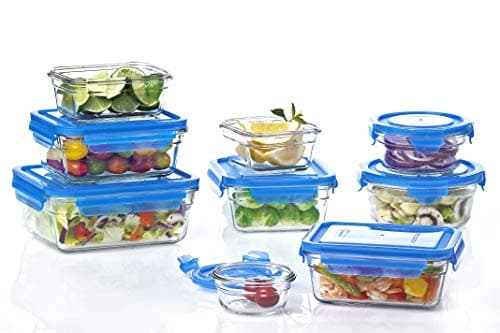
The answer, and the maker's exact words
This question is hard to answer from Glasslock's own US website, which is why so many people end up searching for it. The US pages publish what is in the box and very little about care: the What is Glasslock page covers materials — "containers itself are made of tempered glass", "lids are made of polypropylene", "entire BPA free", made and assembled in South Korea — and the 11292 set page lists the nine container sizes. Neither says a word about the freezer.
The brand's European distributor publishes a customer FAQ that does, and this is the sentence to take away:
So: the freezer is not the hazard. The transition is. Everything below is about managing the gap between minus-18 and a 1,100-watt microwave.
Part by part: glass, lid, gasket
A Glasslock container is three materials, and they behave differently in a freezer.
| Part | Material, as published | In the freezer | What to watch |
|---|---|---|---|
| Base | "Tempered glass" | Fine — the FAQ covers it directly | Do not fill to the brim; rigid walls cannot flex as contents freeze |
| Lid | "Lids are made of polypropylene" | Fine, and it is the part that stops freezer burn | "The lid is never usable for the oven", and never closed in a microwave |
| Gasket | "Removable silicone seal" | Fine; it is what makes the seal the distributor calls airtight and leak-proof | In the US, "gaskets are not available as a separate replacement part at this time" — so a torn seal means a new lid |
| Oven series base | "Only the oven series is suitable for oven use", to 230°C (446°F) | Same as any other base | Look for the OVEN SAFE mark on the glass; not every Glasslock set has it |
Material and care wording from Glasslock USA's own pages and the distributor FAQ, labeled. The oven rating applies to the oven series only — the 11292 18-piece set carries the mark on the base.
The one real risk: thermal shock
Tempered glass does not mind being cold and does not mind being hot. What breaks it is going between the two quickly, because the inner and outer surfaces of the glass change size at different rates and the stress has to go somewhere. That is why the distributor FAQ asks for five to ten minutes at room temperature, and it is the same reason Snapware tells you to "avoid sudden temperature changes to glass" and Anchor Hocking states an oven limit with lids out.
Three practical consequences:
- Frozen block straight into a hot oven is the one thing not to do. Not because Glasslock is fragile, but because no tempered-glass maker rates that transition.
- A microwave is gentler but not exempt. Take the five minutes, and reheat with the lid off — Glasslock's FAQ says "the lid should never be closed while reheating food in the microwave", because a sealed container builds steam pressure.
- Hot food into a cold container is the same mistake in reverse. Let a batch cool before it goes into glass and into the fridge.
The general version of this argument, across every glass brand on the site, is on can you freeze glass meal prep containers, and the lid-by-lid rules are on microwave, oven and freezer safe containers explained.
How to freeze in them
Five habits, in the order they happen:
- Cool first. Portion warm food, leave the lids off until it stops steaming, then seal and freeze. USDA FSIS is clear that freezing itself keeps food safe indefinitely — it is quality, not safety, that degrades — so the goal of good technique is texture, not risk.
- Leave headroom. Food with liquid in it expands as it freezes and a rigid glass wall cannot give. Stop below the rim rather than at it; the smallest containers in the set (0.7 and 1.5 cups) are the easiest to overfill.
- Seal all four tabs. The gasket plus the four-tab latch is what keeps freezer air off the food, and freezer burn is just dehydration from air contact.
- Label the lid, not the glass. A date written on tape on a polypropylene lid survives a dishwasher cycle better than one on glass, and the mixed-shape set makes it easy to lose track of what is in the 3.5-cup rectangle.
- Thaw in the fridge, then give it the five minutes. Overnight in the fridge, or the FAQ's 5 to 10 minutes on the counter if you are reheating straight from frozen.
If the whole point is freezing in portions rather than storing in glass, a silicone tray with a steel frame is the better tool — freeze the block, bag it, get the tray back. That workflow is on how to freeze meal prep without freezer burn, and the freezer-container field is ranked on best freezer containers for meal prep.
The containers this leads to
Our picks for this
Freeze in these
The Glasslock set itself, the tray that saves your glass for the fridge, and the glass set whose own page states a freezer rating.
Best latching glass set
Glasslock 18-piece Oven Safe Set (11292)
Tempered glass · latching lidMicrowaveOvenDishwasher7.7/10Nine tempered-glass containers from 0.7 to 6.3 cups, four-tab latching lids with a removable silicone gasket, and an OVEN SAFE mark on the base of the oven series. Freezing is covered by the distributor FAQ; gaskets are not sold separately in the US.
$38.99Amazon#ad · Price as of November 4, 2026 · Disclosure for the link to Glasslock 18-piece Oven Safe Set (11292)
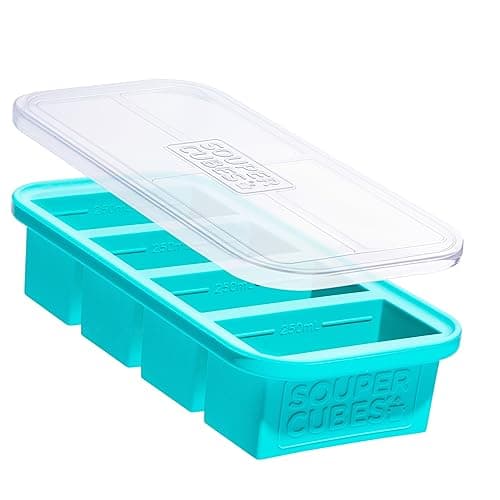
Best portion freezer tray
Souper Cubes 1-Cup Freezer Tray
Silicone tray · steel frameOvenFreezerDishwasher7.6/10Four 1-cup wells in silicone with an embedded steel frame and fill lines in cups and millilitres. Freeze the portion, pop out the block, bag it, and keep the glass free for the fridge. Lifetime warranty.
$21.99Amazon#ad · Price as of November 4, 2026 · Disclosure for the link to Souper Cubes 1-Cup Freezer Tray
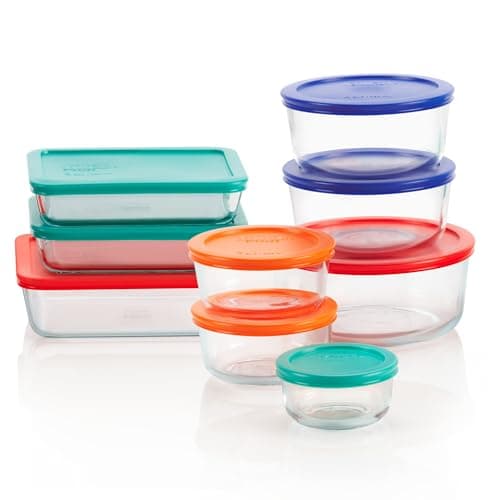
Best baseline glass set
Pyrex Simply Store 18-piece Glass Storage Set
Tempered glassMicrowaveFreezerDishwasher6.9/10Nine tempered-glass dishes from 1 to 7 cups whose own maker page states freezer safe for both glass and lids, with a 2-year warranty covering the lids. Press-on lids, so this is fridge-and-freezer gear rather than bag gear.
$37.99Amazon#ad · Price as of November 4, 2026 · Disclosure for the link to Pyrex Simply Store 18-piece Glass Storage Set
How Meal & Macro picks gear
Researched, compared and scored
Every pick starts with the maker's own product page and manual: the lid, material and care ratings in its exact wording ("leak-proof", "oven safe to 450°F", "top-rack only"), the container-fit and ice-pack arithmetic worked out from published dimensions and the USDA's numbers, and a score on a public rubric for the category that weights the seal, the material and the fit first. Models are compared side by side, so each page lands on one clear pick per use case with the reason stated. Every figure links to where it came from; where the maker's page would not load we cite a retailer and say so.
Scores are editorial judgments built from that documented research. Commissions never set a score or decide a pick. The rubrics and their weights are published.
Questions
Frequently asked
Can Glasslock containers go from the freezer to the microwave?
Not immediately. Glasslock's distributor FAQ asks you to "let them defrost at room temperature for 5-10 minutes first before putting the containers in the microwave or oven, so that the temperature fluctuations are not too big". Reheat with the lid off, which the same FAQ also requires.
Are Glasslock lids freezer safe?
The lids are polypropylene with a removable silicone gasket, and the FAQ's freezing guidance covers the container as sold. The limits on the lid are about heat, not cold: "the lid is never usable for the oven", and it must never be closed in a microwave.
Will Glasslock crack in the freezer?
Not from the cold itself — the risk is a fast temperature change or an overfilled container. Leave headroom for liquid that expands as it freezes, cool food before sealing it, and give a frozen container a few minutes out of the freezer before any heat.
Can you put Glasslock in the oven?
Only the oven series, and only the base: "only the oven series is suitable for oven use for temperatures up to 230°C", marked OVEN SAFE on the glass, and "the lid is never usable for the oven". Check your own set for the mark before assuming it applies.
Keep reading
Related on Meal & Macro
- Glasslock containers reviewThe whole set reviewed, including why its US page publishes so little.
- Can you freeze glass meal prep containersThe same question across every glass brand.
- Glasslock vs PyrexLatching gasket against press-on lid, head to head.
- Best meal prep containers for the freezerRanked on what each maker will state about freezing.
- How to freeze meal prep without freezer burnThe workflow the containers plug into.
- Microwave, oven and freezer safe containers explainedEvery lid rule in one table.
Receipts
Sources
- Glasslock Shop (EU distributor) — customer FAQ (oven series to 230°C, silicone seal, lid not for oven; distributor page, labeled) (checked 2026-09-21)
- Glasslock USA — What is Glasslock (tempered glass, polypropylene lids, BPA free, made in Korea, gasket replacement) (checked 2026-09-21)
- Glasslock USA — 11292 18pc Oven Safe Box Set page (set contents) (checked 2026-09-21)
- Pyrex — Snapware Total Solution Pyrex Glass 10-piece set page (contents, 4 locking tabs, care, warranties) (checked 2026-09-21)
- Amazon listing — Anchor Hocking 4-cup round containers with TrueSeal lids, set of 4 (glass made in the USA, over-molded lid, tempered glass oven safe to 425°F with the lids not oven safe, lids top-rack dishwasher safe; retailer listing, labeled) (checked 2026-10-04)
- Pyrex — Simply Store 18-piece Glass Storage Set product page (set contents, dimensions, tempered glass, lid care, 2-year warranty) (checked 2026-09-21)
- Souper Cubes — 1-Cup Freezer Tray page (portions, dimensions, silicone with steel frame, oven to 415°F trays only, dishwasher, lifetime warranty) (checked 2026-09-21)
- USDA FSIS — Freezing and Food Safety (0°F keeps food safe indefinitely; storage times are for quality) (checked 2026-09-21)
Materials, capacities, seals and care ratings come from the maker's own product pages and manuals (linked on every product) or, where the maker's page would not load, from a retailer listing we label as such. Food-safety numbers are quoted from the USDA and FDA pages linked above. Where a figure isn't published we say so. Amazon sets the prices and changes them often, so the button on every pick checks today's. Read the full method.