Lunch Bags / Guide
How to pack hot and cold food in one lunch box without soggy hot food and warm cold food
An insulated bag is a barrier, not a fridge and not an oven. Put a hot jar and a cold salad in the same compartment and you have built one lukewarm box. The fix is two vessels, one bag, and a packing order.
By Mike M.Updated Researched from maker spec pages
#adMeal & Macro earns from qualifying Amazon purchases. Prices are set by the retailer and change. A commission never decides a ranking. How we score · Disclosure
Why one bag cannot do both
This is the part worth understanding, because once you have it the packing decisions make themselves. An insulated lunch bag has no power source. It is not cooling anything and it is not heating anything — it is a barrier that slows the rate at which heat crosses it. Inside that barrier, everything trends toward the same temperature, and it gets there faster than you would like because the contents are pressed against each other.
So a hot container inside a cold bag is not neutral. It is a heat source sitting inside the one space your cold food was relying on to stay cold, and the insulation that was supposed to protect the salad is now also trapping the heat coming off the jar. You get the worst of both: a hot meal cooling faster than it should because it is radiating into a cold mass, and cold food warming faster than it should because it is being heated from the side.
The way out is to stop asking the bag to do the work and give each temperature its own vessel:
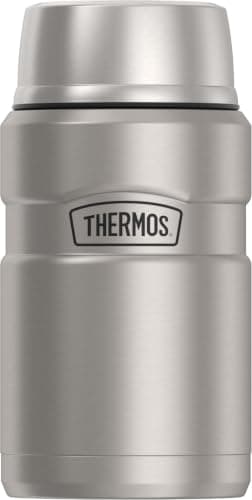
- Hot side: a vacuum-insulated steel food jar. A double-wall vacuum jar is a genuinely different device from an insulated bag — Thermos rates its Stainless King 24 oz jar to keep food "hot 14 hours, cold 24 hours" on its own, in open air, with no bag at all. That number is the maker's published claim and it is the reason the jar does not need the bag's help.
- Cold side: a sealed container plus two frozen cold sources. The containers do nothing thermally; the frozen packs are the cold. The bag's job is only to keep that cold from leaking out.
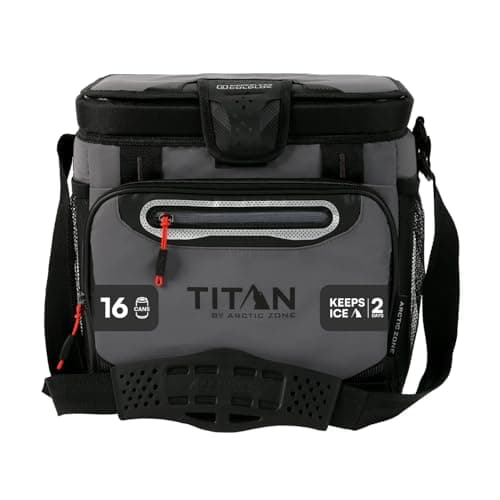
- Keep them from touching. This is the one step people skip. A rigid shelf, a separate pocket, or simply carrying the jar in a bag pocket or by hand solves it. The Titan hard-liner cooler builds this in with a removable shelf the maker describes as letting you "keep hard stuff like drinks separate from soft stuff".
If you only ever pack one temperature, you do not need any of this and the two straightforward rankings are best lunch box to keep food hot and best lunch box to keep food cold.
What actually makes hot food soggy
Soggy hot lunch is almost never the bag's fault, and it is not really about heat either. It is condensation. Hot food gives off steam; a sealed container traps that steam; the steam hits the cooler lid, condenses into water, and the water runs back down onto the food. Four hours of that turns a crisp thing into a wet thing. The hotter the food goes in and the more sealed the container, the more water you collect.
Which gives you three practical rules:
- Wet hot food belongs in a jar with a pressure-relief stopper. Chili, curry, stew, soup, rice bowls — these want to be hot and they do not care about crispness. A jar designed for them handles the pressure that builds as food cools; the Thermos jar lists a "pressure relief stopper" for exactly this reason.
- Crisp hot food does not survive the trip. Stop trying. There is no lunch box that keeps fried chicken crisp for five hours, because the thing that keeps it crisp is dryness and the thing keeping it hot is its own moisture. Pack it cold and crisp, or pack it hot and accept soft, or reheat on site.
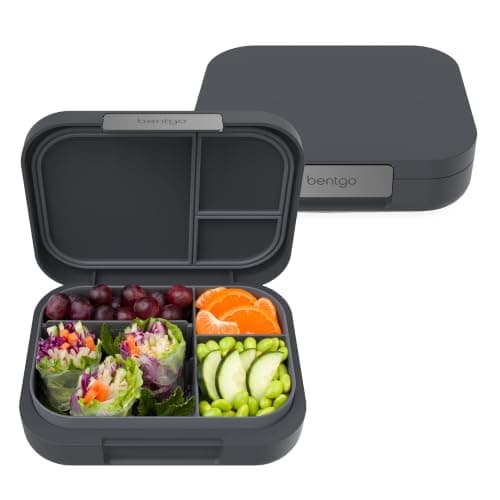
- Separate the wet from the dry, even on the cold side. Dressing in its own cup, croutons and bread in a dry compartment, anything breaded nowhere near anything saucy. A compartment box is how you do this in one vessel — the full field is on best bento boxes for adults.
There is a third path that avoids the problem entirely: pack everything cold and heat it at work. If there is a microwave, that is the better plan and the gear question changes completely — microwave-safe lunch box for adults. If there is no microwave but there is an outlet, a heated box cooks the meal in place: best heated lunch box.
The limits you are packing against
Both sides of this have a published limit, and they are the reason the two-vessel rule is not just about texture.
That second number is what a lukewarm box actually costs you. A cold lunch that has been warmed all morning by a hot jar pressed against it has not just gone soft — it has been drifting up through the range the USDA tells you to keep food out of. This is the whole reason to keep the two vessels from touching, and it is why the count of cold sources matters more in a bag that is also carrying something hot. The arithmetic by shift length is on how many ice packs for a lunch box.
On the hot side the equivalent rule is simpler: hot food needs to stay hot, which a vacuum jar does by starting hot and losing heat slowly. What it cannot do is reheat anything. Food that went in warm comes out cool, and a jar filled at 8 a.m. with food that was already lukewarm has spent the morning inside the danger zone with no way out.
The packing order, by lunch
| What you are packing | Hot side | Cold side | How they travel |
|---|---|---|---|
| Hot main + cold side or fruit | Preheated vacuum jar, filled to the top | Sealed container with two frozen packs, one above and one below | Jar in an outside pocket or carried separately; never inside the cold stack |
| Hot main + a drink | Preheated vacuum jar | Frozen bottle doubles as the second cold source | Hard-liner cooler with the shelf in: drinks below, jar above, not touching |
| Cold main, crisp extras | Nothing hot | Compartment box; dressing in its own cup; dry items in a dry compartment | Two packs around the box; the dry compartment away from the packs |
| Two meals, one for each break | One jar for the hot meal | Two sealed containers, packs between them | Eat the hot one first — it is the one with a clock on it |
Cold-source counts follow the USDA's bag-lunch guidance. Hot-hold times are whatever your jar's maker publishes for that jar; this site does not test gear and does not estimate hours.
Preheating and prechilling
Both vessels need to be at temperature before the food goes in, and this is where most disappointing lunches are actually made.
The jar: fill it with boiling water, cap it, leave it five to ten minutes, tip it out, then add the food straight off the stove. A cold steel jar steals a large share of your food's heat in the first few minutes just bringing its own walls up — do this and the maker's published hours become realistic rather than aspirational. Skipping it is the single most common reason a good jar gets a bad review.
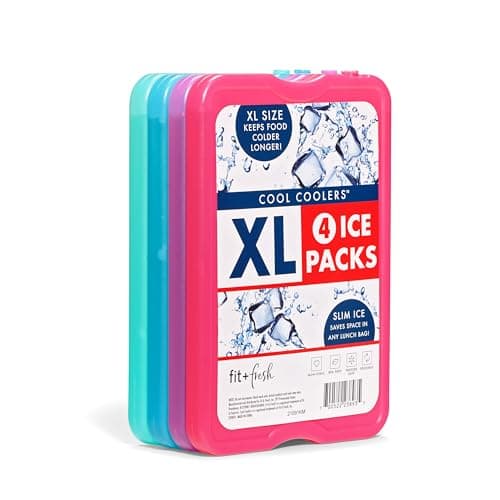
The cold side: freeze the packs overnight — Fit + Fresh says so explicitly for its packs — and chill the food in the fridge before it is packed. A warm container of cooked rice put straight into a cold bag does not get chilled by the bag; it just raises the temperature of everything around it. Cook, cool, fridge overnight, pack in the morning. The cooling-window version of this is part of the meal prep Sunday routine.
Fill the jar full. Air is what cools food in a vacuum jar. A 24 oz jar with 12 oz of chili in it holds heat markedly worse than the same jar full, which is why a jar size that matches your actual portion beats a bigger one.
The gear this leads to
Our picks for this
One hot vessel, one cold system, and a bag that keeps them apart
Best food jar
Thermos Stainless King 24 oz Food Jar
18/8 vacuum · hot 14 h / cold 24 hInsulatedDishwasher8.1/10The hot side on its own terms: 18/8 vacuum steel the maker rates hot 14 hours and cold 24, with a pressure-relief stopper for food that steams.
$29.49Amazon#ad · Price as of November 4, 2026 · Disclosure for the link to Thermos Stainless King 24 oz Food Jar
Best hard-liner cooler bag
Titan by Arctic Zone 16-Can Zipperless HardBody Cooler
16 cans · ice up to 2 days · hard linerInsulatedLeak-resistant8.7/10A hard liner and a removable shelf — the cheapest way to carry a hot jar and a cold lunch in one bag without them touching. Check the 4.95 in interior depth against your containers first.
$46.99Amazon#ad · Price as of November 4, 2026 · Disclosure for the link to Titan by Arctic Zone 16-Can Zipperless HardBody Cooler
Best lunch-bag ice packs
Fit + Fresh Cool Coolers XL Ice Packs
5 × 2.5 × 7 in · BPA-free · leakproofLeak-resistant7.7/105 × 2.5 × 7 in hard-shell packs, over the USDA's 5 × 3 minimum, so two of them satisfy the rule on their own.
$10.19Amazon#ad · Price as of November 4, 2026 · Disclosure for the link to Fit + Fresh Cool Coolers XL Ice Packs
Best bento box for adults
Bentgo Modern Lunch Box
5.5 cups · removable microwave trayMicrowaveDishwasherLeak-resistant6.3/10The cold side with dry and wet kept apart: three or four compartments at 5.5 cups, and a tray that lifts out if you do get to a microwave.
$37.99Amazon#ad · Price as of November 4, 2026 · Disclosure for the link to Bentgo Modern Lunch Box
Three mistakes
Putting the hot jar in the middle of the cold stack. It feels tidy and it is the single worst placement available: maximum contact with the food you are trying to keep cold, and the cold mass pulling heat out of your lunch all morning.
Treating a two-compartment bag as hot-and-cold rated. Two zippered compartments in a soft bag are two pockets separated by a few millimeters of fabric. They are useful for keeping a sandwich away from a wet pack; they are not a thermal barrier, and no maker in this category claims they are. The hot-and-cold separation has to come from the vessels.
Sealing hot food in a leak-resistant lunch box and hoping. Pressure builds as hot food cools, and a sealed non-vented lid either pops or weeps. Bentgo, for instance, is careful to call the Modern lid "leak-resistant" rather than leak-proof — and a food jar is the vessel actually designed to be filled hot. If liquid-tight is the requirement, the honest field is on best leak-proof meal prep containers.
How Meal & Macro picks gear
Researched, compared and scored
Every pick starts with the maker's own product page and manual: the lid, material and care ratings in its exact wording ("leak-proof", "oven safe to 450°F", "top-rack only"), the container-fit and ice-pack arithmetic worked out from published dimensions and the USDA's numbers, and a score on a public rubric for the category that weights the seal, the material and the fit first. Models are compared side by side, so each page lands on one clear pick per use case with the reason stated. Every figure links to where it came from; where the maker's page would not load we cite a retailer and say so.
Scores are editorial judgments built from that documented research. Commissions never set a score or decide a pick. The rubrics and their weights are published.
Questions
Frequently asked
Can one lunch box keep food hot and cold at the same time?
Not in one compartment. An insulated bag slows heat transfer in both directions, so hot and cold contents pressed together end up meeting in the middle. What works is two vessels in one bag: a vacuum-insulated jar that holds its own heat, and a sealed container with two frozen cold sources, kept apart by a shelf or a separate pocket.
Why does my hot lunch go soggy?
Condensation, not heat. Steam from hot food collects on the lid, turns back into water and drips onto the food. Wet dishes like chili and curry are unaffected and belong in a vented food jar; anything crisp should be packed cold and dry, or reheated at work.
Should I put a thermos inside my lunch bag?
Only if there is nothing cold in there with it. A vacuum jar does not need the bag to hold its heat, so if you are also carrying a cold lunch the jar is better off in an outside pocket, above a rigid shelf, or carried by hand.
How many ice packs do I need if I am also carrying something hot?
Start from the USDA's floor of two cold sources, each at least 5 × 3 inches, one above and one below the food — and treat that as the minimum rather than the target, because a hot jar in the same bag is working against them. The full table by shift length is on how many ice packs for a lunch box.
Is a lunch box with a thermos built in a good solution?
It is a convenience, not a thermal fix: the jar does the hot work and the box does the cold work, exactly as with separate pieces. The advantage is that the two arrive sized for each other. Those sets are ranked on best lunch box with thermos.
Do I need to preheat a food jar?
Yes, if you want the hours the maker prints. Fill it with boiling water for five to ten minutes, tip it out, then add food straight off the heat. A cold jar absorbs a meaningful share of your food's heat before it starts holding any.
Keep reading
Related on Meal & Macro
- Best lunch box with thermosSets that ship the hot vessel and the cold box together.
- Best lunch box to keep food hotIf only the hot side matters, start here.
- Best lunch box to keep food coldThe cold-hold ranking, by the hours makers publish.
- How many ice packs for a lunch box?The USDA's floor, and the count by shift length.
- Best thermos food jarsThe hot vessel ranked on published hot-hold hours.
- Microwave-safe lunch box for adultsThe better plan when there is a microwave at work.
Receipts
Sources
- USDA FSIS — Keeping “Bag” Lunches Safe (two cold sources, gel packs at least 5 x 3 in, 2-hour rule) (checked 2026-09-21)
- USDA FSIS — Danger Zone 40°F–140°F (checked 2026-09-21)
- Thermos — 24 oz Stainless King Food Jar page (hot 14 h / cold 24 h, 18/8 stainless, dimensions, weight, top-rack dishwasher) (checked 2026-09-21)
- Arctic Zone — Titan 16 Can Zipperless HardBody Cooler page (dimensions, weight, ice up to 2 days, HardBody leak-proof liner, SmartShelf) (checked 2026-09-21)
- Fit + Fresh — Cool Coolers XL Ice page (5 x 2.5 x 7 in, BPA-free, leakproof, non-toxic, freeze overnight) (checked 2026-09-21)
- Bentgo — Modern Lunch Box page (5.5-cup total, compartment capacities, dimensions, weight, materials, leak-resistant silicone seal, removable microwave/dishwasher tray, 2-year warranty) (checked 2026-09-26)
Materials, capacities, seals and care ratings come from the maker's own product pages and manuals (linked on every product) or, where the maker's page would not load, from a retailer listing we label as such. Food-safety numbers are quoted from the USDA and FDA pages linked above. Where a figure isn't published we say so. Amazon sets the prices and changes them often, so the button on every pick checks today's. Read the full method.