Lunch Bags / Guide
How to keep lunch cold without a fridge: the packing that actually holds
No break-room fridge, or one you would not trust. The USDA's own rule for a bag lunch, the packing order that makes it work, and the honest limit on how long a soft bag can carry chicken.
By Mike M.Updated Researched from maker spec pages
#adMeal & Macro earns from qualifying Amazon purchases and from brand partner programs. Prices are set by the retailer or the brand and change. A commission never decides a ranking. How we score · Disclosure
The rule, from the USDA
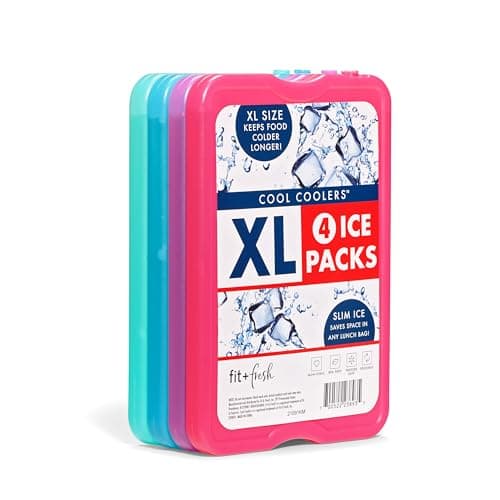
There is an actual published instruction for this, and it is more specific than most advice on the subject. USDA FSIS, writing about bag lunches, says to use at least two cold sources — frozen gel packs not smaller than roughly 5 × 3 inches, or a gel pack plus a frozen drink — placed above and below the food, and frozen overnight before they go in.
Three details in that sentence do the work. Two, because one pack cools what it touches and little else. Not smaller than 5 × 3 inches, because thermal mass is the whole mechanism and a slim novelty pack does not have any. And above and below, because cold air falls — a pack sitting underneath a container is cooling the table, not the chicken.
The surrounding number is the one everybody already half-knows: perishable food should not sit between 40°F and 140°F for more than two hours, or one hour when it is above 90°F. The ice-pack arithmetic for different bag sizes is worked through on how many ice packs a lunch box needs.
The packing order
The order genuinely matters, and it takes ten seconds.
- Pack one frozen pack flat on the bottom. Full width if the bag allows, so the containers sit on cold rather than beside it.
- Containers next, sealed and already cold. Packed tight against each other — air gaps are where the heat gets in, and a half-empty bag warms far faster than a full one.
- Second pack on top. This is the one people leave out and the one doing most of the work, because the cold it sheds falls through the food.
- Fill the gaps. A rolled tea towel, an extra drink, anything. Dead air is the enemy; a bag packed full holds hours longer than the same bag half full.
- Zip it and leave it zipped. Every opening costs you. Decide at the start of the day whether the drink lives in the bag or out of it.
Prechilling: the free upgrade
The single biggest improvement available to you costs nothing. An insulated bag does not make cold — it slows the arrival of heat. Everything you put in it warm is heat you have asked the packs to remove before they can start holding a temperature.
So: the food goes in cold from the fridge, never warm from the pan. The bag itself is better off spending the night somewhere cool rather than on a radiator. And the packs are frozen solid overnight, not slushy from four hours in a crowded freezer. The same principle in the opposite direction — preheating a jar for hot food — is on how to pack hot and cold food in one box.
The honest limit on a soft bag
A soft insulated bag with two good packs, packed full and kept out of the sun, is a half-day tool. That covers the overwhelming majority of office and school situations: pack at seven, eat at noon.
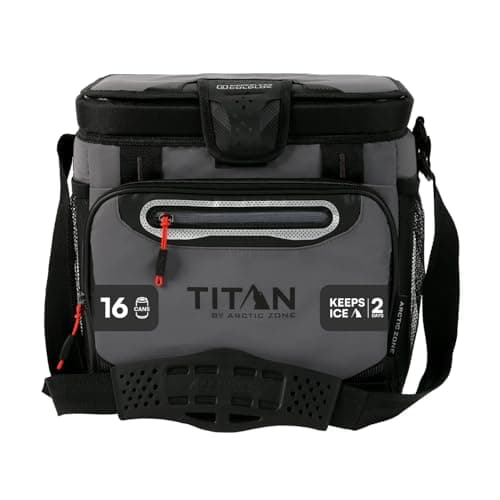
What it is not is a twelve-hour tool. A long shift, a jobsite in July, a truck cab, a hospital locker you cannot get back to — those are hard-body cooler territory, where the makers publish ice-retention figures in days rather than hours because the insulation is rigid foam rather than a lined fabric wall. Titan by Arctic Zone, for instance, publishes "Keeps ice up to 2 days" for its backpack cooler, alongside the radiant-barrier construction that figure depends on.
How the two formats actually differ, and what you give up in weight and bulk to get those hours, is on hard lunch box vs soft lunch bag. If the constraint is heat rather than hours, the hot-weather picks are ranked separately. And the published cold-hold figures across the whole category sit on how long an insulated lunch bag keeps food cold.
Foods that tolerate a long day
This is the part most gear advice skips, and it is free. If there is genuinely no fridge and no room for a proper cooler, change what is in the box rather than hoping the bag does something it cannot.
- Shelf-stable by design: whole fruit, nuts, hard crackers, nut butter, dried fruit, tinned fish in a sealed pouch, a sealed shelf-stable protein drink.
- Tolerant but better cold: hard cheeses, cured meats, hummus in a sealed pot, a grain salad with an acidic dressing.
- Needs the packs, no exceptions: cooked chicken and other cooked meats, rice and pasta dishes, eggs, dairy, anything mayonnaise-based, cut melon.
The last group is where the 3-to-4-day fridge window and the two-hour room-temperature rule both apply — how long meal prep lasts in the fridge has the figures. A box of cooked chicken is not a box you improvise with.
What to buy
In order of how much it changes the outcome: the packs first, then the bag that matches the length of your day.
Our picks for this
Two cold sources and something to put them in
The packs do the work; the bag decides how long the work lasts. Buy the packs regardless of which bag you own.
Best lunch-bag ice packs
Fit + Fresh Cool Coolers XL Ice Packs
5 × 2.5 × 7 in · BPA-free · leakproofLeak-resistant9.4/10XL packs, because the USDA's rule has a minimum size in it — a slim pack has no thermal mass to spend.
$12.99Fit + Fresh Cool#ad · Price as of November 9, 2026 · Disclosure for the link to Fit + Fresh Cool Coolers XL Ice Packs
Best hard-liner cooler bag
Titan by Arctic Zone 16-Can Zipperless HardBody Cooler
16 cans · ice up to 2 days · hard linerInsulatedLeak-resistant9.8/10The hard-body answer for a full shift, where the maker publishes an ice-retention figure rather than a vague claim.
$59.16Titan by Arctic#ad · Price as of November 9, 2026 · Disclosure for the link to Titan by Arctic Zone 16-Can Zipperless HardBody Cooler
Best one-meal bag
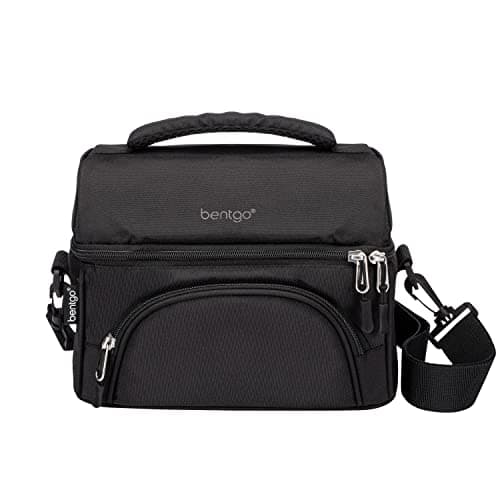
Bentgo Deluxe Lunch Bag
1–2 meals · 4 hInsulated9.0/10The soft half-day bag: lighter, foldable, and sized around meal containers rather than cans.
$24.99Bentgo Deluxe Lunch#ad · Price as of November 9, 2026 · Disclosure for the link to Bentgo Deluxe Lunch Bag
How Meal & Macro picks gear
Researched, compared and scored
Every pick starts with the maker's own product page and manual: the lid, material and care ratings in its exact wording ("leak-proof", "oven safe to 450°F", "top-rack only"), the container-fit and ice-pack arithmetic worked out from published dimensions and the USDA's numbers, and a score on a public rubric for the category that weights the seal, the material and the fit first. Models are compared side by side, so each page lands on one clear pick per use case with the reason stated. Every figure links to where it came from; where the maker's page would not load we cite a retailer and say so.
Scores are editorial judgments built from that documented research. Commissions never set a score or decide a pick. The rubrics and their weights are published.
Questions
Frequently asked
How do you keep lunch cold without a refrigerator?
Two frozen gel packs, one under the food and one on top, inside an insulated bag, with the food already cold when it goes in. That is USDA FSIS's own bag-lunch instruction; each pack should be no smaller than about 5 × 3 inches, and a frozen drink can be one of the two.
How long will a lunch bag keep food cold with ice packs?
A soft insulated bag packed full with two frozen packs is a half-day tool in normal indoor conditions. Hard-body coolers publish much longer ice-retention figures because the insulation is rigid rather than fabric-lined — the published numbers are collected on how long an insulated lunch bag keeps food cold.
Is it safe to eat meal prep that sat in a lunch bag all day?
Only if it stayed below 40°F. Perishable food should not spend more than two hours between 40°F and 140°F — one hour above 90°F. If the packs are fully thawed and the box is at room temperature, the food has been outside that window.
Can I use a frozen water bottle instead of an ice pack?
Yes, and the USDA names it as an option — a gel pack plus a frozen drink counts as the two cold sources. The trade-offs between the two are on ice pack vs frozen water bottle.
Does packing the bag full really matter?
Yes. Air warms far faster than food, so a half-empty bag loses its cold quickly. Filling the gaps with a rolled cloth or an extra drink is free and measurably effective.
Keep reading
Related on Meal & Macro
- How many ice packs a lunch box needsThe count, worked from the USDA's own rule.
- Ice pack vs frozen water bottleWhich of the two cold sources to use.
- How long a packed lunch can sit outThe two-hour rule, and what it means at a desk.
- Best lunch box to keep food coldThe boxes ranked on published cold-hold.
- Hard box vs soft bagWhere the extra hours actually come from.
Receipts
Sources
- USDA FSIS — Keeping “Bag” Lunches Safe (two cold sources, gel packs at least 5 x 3 in, 2-hour rule) (checked 2026-09-21)
- USDA FSIS — Danger Zone 40°F–140°F (checked 2026-09-21)
- USDA FSIS — Leftovers and Food Safety (3–4 days refrigerated, 2-hour rule, 40°F, 165°F reheat, shallow containers) (checked 2026-09-21)
- Fit + Fresh — Cool Coolers XL Ice page (5 x 2.5 x 7 in, BPA-free, leakproof, non-toxic, freeze overnight) (checked 2026-09-21)
- Titan by Arctic Zone — 24 Can Backpack Cooler page ("Holds 24 Cans", "Keeps ice up to 2 days", "Deep Freeze Performance Insulation with radiant heat barrier and Therma-Flect radiant barrier", "Ultra Safe leak proof lining with Microban antimicrobial protection" with the footnote that the zipper is not leak proof, a "triple layer Cold Block base", exterior 10.50 × 7.50 × 16.50 in and interior 9.50 × 5.50 × 14.50 in, "Weight: 1.60 lbs", exterior pockets, an insulated front compartment, a "padded back with breathable mesh panels", "adjustable, padded backpack straps" and a "rugged, water and stain repellent, wipe clean exterior", $52.99) (checked 2026-10-26)
- Bentgo — Deluxe Lunch Bag page (10 x 7 x 7 in, PEVA leak-proof insulation, up to 4 hours, mesh ice-pack pocket) (checked 2026-09-21)
Materials, capacities, seals and care ratings come from the maker's own product pages and manuals (linked on every product) or, where the maker's page would not load, from a retailer listing we label as such. Food-safety numbers are quoted from the USDA and FDA pages linked above. Where a figure isn't published we say so. Amazon sets the prices and changes them often, so the button on every pick checks today's. Read the full method.