Lunch Bags / Guide
How long can a packed lunch sit out? Two hours, and what the clock is really counting
The USDA draws the line at two hours between 40F and 140F, one hour above 90F. Here is what that means for a bag on a desk, why insulation pauses the clock instead of resetting it, and which foods are exempt.
By Mike M.Updated Researched from maker spec pages
#adMeal & Macro earns from qualifying Amazon purchases and from brand partner programs. Prices are set by the retailer or the brand and change. A commission never decides a ranking. How we score · Disclosure
The rule, precisely
USDA FSIS is specific about this. Perishable food should not be left in the range between 40°F and 140°F for more than two hours. When the surrounding temperature is above 90°F — a car in summer, an un-air-conditioned site, a yard in July — that allowance drops to one hour.
The same guidance is what produces the other numbers this site quotes constantly: refrigerate cooked food within two hours, keep the refrigerator at 40°F or below, cooked leftovers keep 3 to 4 days, reheat to 165°F. They are all expressions of one idea — time spent in the middle band is what counts.
What the clock is counting
It is not counting hours since you made the food. It is counting hours the food has spent warm. Bacteria multiply fastest in that middle band; below 40°F they are slowed to the point that the food keeps for days, which is exactly why the fridge figure is measured in days and the counter figure in hours.
Which means the single most useful question about a packed lunch is not "how long has it been out". It is "has it been above 40°F, and for how long" — and the honest answer for a properly packed insulated bag is usually "no, not yet".
Insulation pauses the clock
An insulated bag does not make cold. It slows the arrival of heat, and the frozen packs inside it are what hold the food below 40°F while that happens. For as long as the contents are genuinely below 40°F, you are not spending the two hours — the bag is a portable extension of the fridge, not a stay of execution.
That protection ends when the packs thaw and the contents drift up. From that moment the two-hour clock runs normally. In practice this is why the USDA's bag-lunch guidance is written as it is: two cold sources, no smaller than roughly 5 × 3 inches, above and below the food, frozen overnight. Two packs do not merely cool better; they push back the moment the clock starts. The packing detail is on how to keep lunch cold without a fridge, and the pack count by bag size on how many ice packs a lunch box needs.
The mirror image applies to hot food. A preheated vacuum jar holds a meal above 140°F, which is the top of the band rather than the bottom — same principle, opposite end. The published hot-hold figures are on best thermos food jars.
What the rule does not cover
The two-hour rule is about perishable food. A fair amount of what goes in a lunch bag is not perishable and never was:
- Whole uncut fruit, nuts, dried fruit, crackers, bread, unopened shelf-stable drinks.
- Nut butter, honey, hard crackers, sealed pouches of tuna that have not been opened.
- Most hard cheeses tolerate a few hours better than soft, but they are still dairy — keep them cold.
And the foods where it applies most strictly: cooked chicken and other cooked meats, rice and pasta dishes, eggs, dairy, anything mayonnaise-based, and cut melon. That is precisely the list a meal-prepped lunch is made of, which is why the bag matters on this site more than it would on a sandwich blog.
Four real situations
Packed at 7 a.m., eaten at noon, bag on a desk indoors. Two good packs hold this comfortably. The food has very likely not crossed 40°F, so the two hours are untouched.
Bag left in a car between 8 a.m. and 1 p.m. in summer. This is the bad one. A parked car clears 90°F quickly, which puts you on the one-hour allowance once the packs give out. Take the bag in with you, or use a hard-body cooler with a published ice-retention figure.
Twelve-hour shift with no fridge access. A soft bag is not the right tool. Either a hard-body cooler, or move the hot meal into a preheated vacuum jar and keep the cold items in the bag — the split is on how to pack hot and cold food in one box.
Forgot the bag on the kitchen counter all morning. Four hours at room temperature is outside the rule regardless of what the food looks or smells like. Smell is not a safety test; the USDA's position is to discard it.
What keeps you inside it
Three things, in the order they change the outcome: the cold sources, a bag that is actually rated for your day, and a jar if any part of the meal wants to be hot instead.
Our picks for this
Staying under 40F for the length of your day
The packs decide when the clock starts; the container decides how long you can push that moment back.
Best lunch-bag ice packs
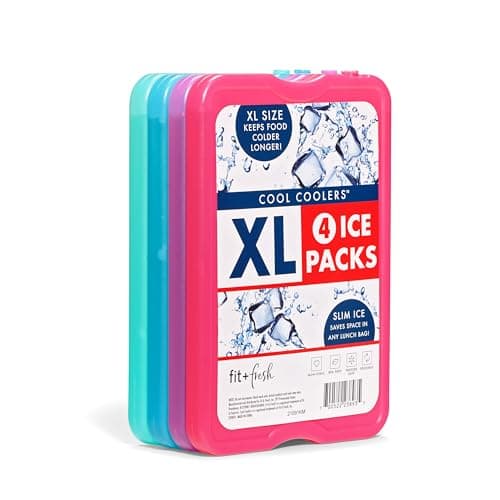
Fit + Fresh Cool Coolers XL Ice Packs
5 × 2.5 × 7 in · BPA-free · leakproofLeak-resistant9.4/10Two of these, above and below the food, is the USDA's own instruction rather than a preference.
$12.99Fit + Fresh Cool#ad · Price as of November 9, 2026 · Disclosure for the link to Fit + Fresh Cool Coolers XL Ice Packs
Best hard-liner cooler bag
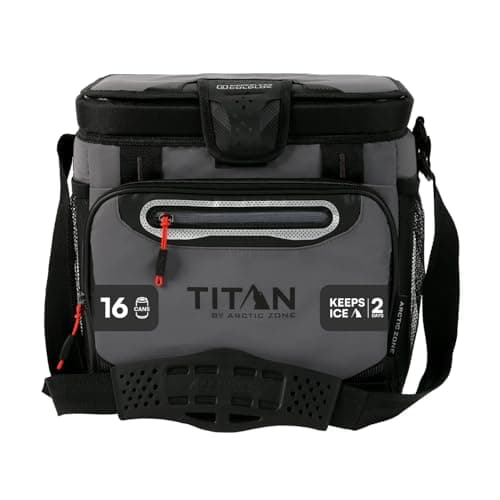
Titan by Arctic Zone 16-Can Zipperless HardBody Cooler
16 cans · ice up to 2 days · hard linerInsulatedLeak-resistant9.8/10Hard-body insulation for the days where a soft bag runs out — makers publish ice retention in days, not hours.
$59.16Titan by Arctic#ad · Price as of November 9, 2026 · Disclosure for the link to Titan by Arctic Zone 16-Can Zipperless HardBody Cooler
Best food jar
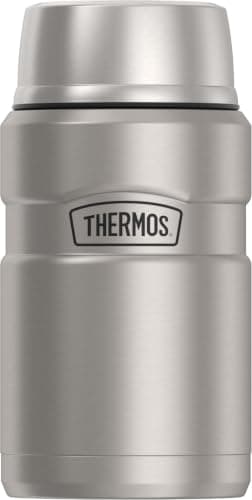
Thermos Stainless King 24 oz Food Jar
18/8 vacuum · hot 14 h / cold 24 hInsulatedDishwasher9.6/10The other end of the band: a preheated vacuum jar holds the meal above 140F instead of below 40F.
$29.49Thermos Stainless#ad · Price as of November 9, 2026 · Disclosure for the link to Thermos Stainless King 24 oz Food Jar
How Meal & Macro picks gear
Researched, compared and scored
Every pick starts with the maker's own product page and manual: the lid, material and care ratings in its exact wording ("leak-proof", "oven safe to 450°F", "top-rack only"), the container-fit and ice-pack arithmetic worked out from published dimensions and the USDA's numbers, and a score on a public rubric for the category that weights the seal, the material and the fit first. Models are compared side by side, so each page lands on one clear pick per use case with the reason stated. Every figure links to where it came from; where the maker's page would not load we cite a retailer and say so.
Scores are editorial judgments built from that documented research. Commissions never set a score or decide a pick. The rubrics and their weights are published.
Questions
Frequently asked
How long can a packed lunch sit out unrefrigerated?
Two hours between 40°F and 140°F, or one hour if the surroundings are above 90°F, per USDA FSIS. The clock is cumulative across the whole day, not per stretch.
Does an insulated lunch bag count as refrigeration?
Not by itself — an insulated bag slows heat, and the frozen packs inside it do the cooling. While the contents are genuinely below 40°F the two-hour clock has not started; it starts when the packs give out.
Is meal prep safe to eat if the ice pack melted?
It depends how long it has been above 40°F since then, not on whether the pack is soft. Under two hours in normal indoor conditions, it is inside the rule. Longer than that, or above 90°F for over an hour, and the USDA's position is to discard it.
Can I tell by smell whether a packed lunch is still good?
No. The organisms that cause foodborne illness do not reliably change how food smells, looks or tastes, which is why the guidance is written as a time-and-temperature rule rather than a sensory one.
Does the two-hour rule apply to fruit and crackers?
No. It applies to perishable food — cooked meat, rice and pasta dishes, eggs, dairy, cut melon. Whole fruit, nuts, dried fruit, bread and sealed shelf-stable items are outside it.
Keep reading
Related on Meal & Macro
Receipts
Sources
- USDA FSIS — Danger Zone 40°F–140°F (checked 2026-09-21)
- USDA FSIS — Keeping “Bag” Lunches Safe (two cold sources, gel packs at least 5 x 3 in, 2-hour rule) (checked 2026-09-21)
- USDA FSIS — Leftovers and Food Safety (3–4 days refrigerated, 2-hour rule, 40°F, 165°F reheat, shallow containers) (checked 2026-09-21)
- USDA FSIS — How Temperatures Affect Food (checked 2026-09-21)
- FoodSafety.gov — Cold Food Storage Chart (checked 2026-09-21)
Materials, capacities, seals and care ratings come from the maker's own product pages and manuals (linked on every product) or, where the maker's page would not load, from a retailer listing we label as such. Food-safety numbers are quoted from the USDA and FDA pages linked above. Where a figure isn't published we say so. Amazon sets the prices and changes them often, so the button on every pick checks today's. Read the full method.