Lunch Bags / Guide
Ice pack vs frozen water bottle: which cold source belongs in your lunch bag
Both count toward the USDA's two-cold-source rule. They are not interchangeable in practice — one shapes itself to the food, the other turns into your drink. Here is which to use when.
By Mike M.Updated Researched from maker spec pages
#adMeal & Macro earns from qualifying Amazon purchases and from brand partner programs. Prices are set by the retailer or the brand and change. A commission never decides a ranking. How we score · Disclosure
Both count — officially
This is not a judgement call. USDA FSIS's bag-lunch guidance says to use at least two cold sources, and it names them: frozen gel packs no smaller than about 5 × 3 inches, or a gel pack together with a frozen drink, placed above and below the food and frozen overnight.
So the honest headline is that the argument is smaller than the internet makes it. A frozen bottle is a legitimate cold source. The question is not whether it counts — it is which one you want doing the heavy lifting, and the answer comes down to geometry.
Where they actually differ
Contact area. A flat gel pack lies against a container across its whole face. A bottle touches it along a line. Cooling happens where cold meets food, and a cylinder is the worst shape for that in a rectangular bag. This is the difference that matters most and the one people never weigh.
Staying put. A flat pack sits where you put it. A bottle rolls, and the moment it rolls it stops being the top cold source and becomes a cold object in a corner. In a bag carried on a bike, in a truck or on a site, this is not a small effect.
Duration. A large frozen bottle carries more thermal mass than a slim pack and will usually outlast it in absolute terms — a litre of ice is a lot of ice. But it spends that mass cooling the air around it rather than the food against it, so the extra hours do not translate into proportionally colder chicken.
Condensation. A bottle sweats as it thaws, and that water ends up in the bag. Gel packs sweat too, but a wiped pack in a lined bag is a smaller problem than a bottle producing a puddle. If your bag does not have a wipe-clean liner, this becomes the deciding factor by about week three.
Weight and bulk. The bottle is heavier and takes space you could be filling with food — but it replaces a drink you would have carried anyway, so in a full day's kit it is often free.
Side by side
| Flat gel pack | Frozen water bottle | |
|---|---|---|
| Counts toward the USDA's two sources | Yes, at 5 × 3 in or larger | Yes, named as an option |
| Contact with the food | Full face | A line along the container |
| Can sit on top of the food | Yes — where cold falls through | Awkwardly, and it rolls off |
| Thermal mass | Moderate, depends on size | High for a large bottle |
| Condensation in the bag | Some; wipes off | More, and it pools |
| Doubles as something useful | No | Yes — it becomes your drink |
| Cost | Bought once | Free, using a bottle you own |
| Best role | Primary, top and bottom | Second source, filling a gap |
Which to use, by day
Office, five to six hours: one flat pack underneath, one on top. A bottle is optional. This is the standard case and two decent packs handle it comfortably.
Long shift, eight to twelve hours: both, plus a bag that is actually rated for it. Put the packs top and bottom and let the frozen bottle fill the side gap — it is doing double duty as the gap-filler that stops warm air circulating. The limits of a soft bag over a long day are on how to keep lunch cold without a fridge.
Hot weather or outdoors: packs top and bottom, bottle as third, and the bag out of direct sun — the USDA's window shortens to one hour above 90°F. The bags that hold up are ranked on best lunch bag for hot weather.
Cycling or a bag that gets thrown around: packs, not bottles. A rolling cylinder in a soft bag finds the one corner where it is useless.
Nothing in the house but a freezer: two frozen bottles will do a respectable job for a short day. Freeze them lying down so they are flat-ish on one side, and put the food between them.
What to buy
The pack is the only part worth spending on — the bottle you already own. Size is the spec that matters, because the USDA's rule has a minimum in it.
Our picks for this
The cold source, and something to put it in
Buy packs large enough to clear the USDA's stated minimum, and a bag with a liner that tolerates condensation.
Best lunch-bag ice packs
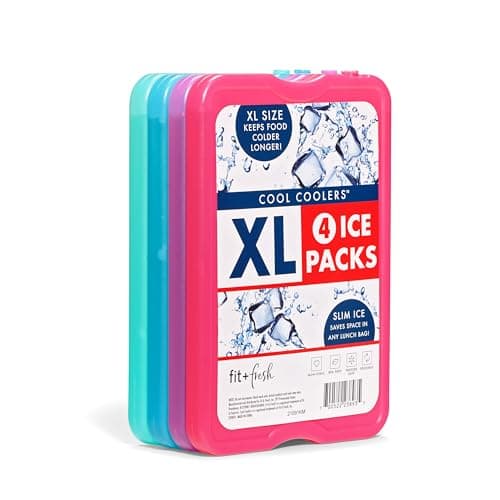
Fit + Fresh Cool Coolers XL Ice Packs
5 × 2.5 × 7 in · BPA-free · leakproofLeak-resistant9.4/10XL and flat: full-face contact with a container, and comfortably over the 5 × 3 inch minimum the USDA states.
$12.99Fit + Fresh Cool#ad · Price as of November 9, 2026 · Disclosure for the link to Fit + Fresh Cool Coolers XL Ice Packs
Best one-meal bag
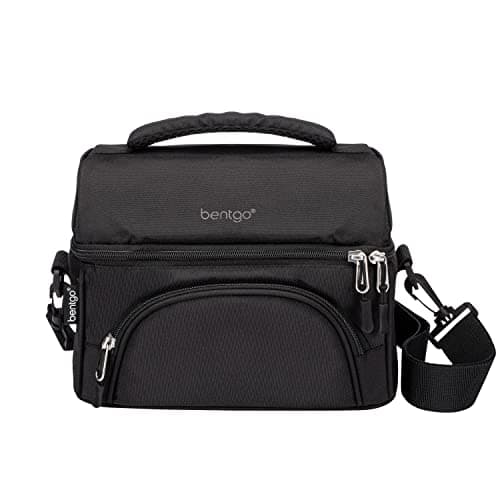
Bentgo Deluxe Lunch Bag
1–2 meals · 4 hInsulated9.0/10A wipe-clean lined bag sized around meal containers, which is what makes condensation a non-issue rather than a weekly chore.
$24.99Bentgo Deluxe Lunch#ad · Price as of November 9, 2026 · Disclosure for the link to Bentgo Deluxe Lunch Bag
How Meal & Macro picks gear
Researched, compared and scored
Every pick starts with the maker's own product page and manual: the lid, material and care ratings in its exact wording ("leak-proof", "oven safe to 450°F", "top-rack only"), the container-fit and ice-pack arithmetic worked out from published dimensions and the USDA's numbers, and a score on a public rubric for the category that weights the seal, the material and the fit first. Models are compared side by side, so each page lands on one clear pick per use case with the reason stated. Every figure links to where it came from; where the maker's page would not load we cite a retailer and say so.
Scores are editorial judgments built from that documented research. Commissions never set a score or decide a pick. The rubrics and their weights are published.
Questions
Frequently asked
Is a frozen water bottle as good as an ice pack?
It is an officially acceptable cold source — USDA FSIS names a gel pack plus a frozen drink as the two sources for a bag lunch. It is less efficient per unit of ice, because a cylinder only touches the food along a line, but it carries more thermal mass and doubles as your drink.
How many ice packs does a lunch bag need?
At least two cold sources, one above and one below the food, each gel pack no smaller than about 5 × 3 inches. The count for larger bags is worked out on how many ice packs a lunch box needs.
Where should the ice pack go in a lunch bag?
One flat on the bottom and one on top of the containers. Cold air falls, so the top pack does more of the work than people expect — a single pack underneath is the most common packing mistake.
Do frozen water bottles make the bag wet?
They produce more condensation than a gel pack as they thaw, and it pools. In a bag with a wipe-clean or heat-welded liner that is a minor annoyance; in an unlined bag it becomes the reason you stop using it.
Can I freeze a drink other than water?
Yes, as long as the container tolerates it — leave headroom, because liquid expands as it freezes. A sealed sports drink or juice works the same way and is still one of the two cold sources.
Keep reading
Related on Meal & Macro
Receipts
Sources
- USDA FSIS — Keeping “Bag” Lunches Safe (two cold sources, gel packs at least 5 x 3 in, 2-hour rule) (checked 2026-09-21)
- USDA FSIS — Danger Zone 40°F–140°F (checked 2026-09-21)
- Fit + Fresh — Cool Coolers XL Ice page (5 x 2.5 x 7 in, BPA-free, leakproof, non-toxic, freeze overnight) (checked 2026-09-21)
- Fit + Fresh — Cool Coolers Adult Slim Ice page (4.75 x 0.5 x 5 in, set of 4; wording via the search index) (checked 2026-09-21)
- Bentgo — Deluxe Lunch Bag page (10 x 7 x 7 in, PEVA leak-proof insulation, up to 4 hours, mesh ice-pack pocket) (checked 2026-09-21)
Materials, capacities, seals and care ratings come from the maker's own product pages and manuals (linked on every product) or, where the maker's page would not load, from a retailer listing we label as such. Food-safety numbers are quoted from the USDA and FDA pages linked above. Where a figure isn't published we say so. Amazon sets the prices and changes them often, so the button on every pick checks today's. Read the full method.