Systems / Guide
How to meal prep for a family of four: quantities, components and one big pot
Four people eating for a week is 20 to 28 servings. Prepping that as finished dinners fails by Wednesday. Prepping it as components — one protein, two starches, roasted vegetables, three sauces — does not.
By Mike M.Updated Researched from maker spec pages
#adMeal & Macro earns from qualifying Amazon purchases. Prices are set by the retailer and change. A commission never decides a ranking. How we score · Disclosure
The quantities, in pounds and cups
The first thing that breaks family meal prep is under-cooking. A recipe that says "serves 4" usually serves two adults and two children once, with nothing left for a lunch. Here is the arithmetic for five dinners plus two adult lunches, which is the realistic target for a weeknight week:
| Component | Per adult serving | Week for four (≈22 servings) | Cook it as |
|---|---|---|---|
| Protein | 5–6 oz cooked (≈7–8 oz raw) | 8–10 lb raw across two proteins | One slow-cooker batch + two sheet pans |
| Starch | 1–1.5 cups cooked | 20–28 cooked cups across two kinds | Rice in one pot; potatoes roasted on a pan |
| Vegetables | 1–2 cups | Two full sheet pans roasted, plus raw for lunches | 425°F, single layer, 25 minutes |
| Sauce | 2–4 tbsp | Three jars, about a cup each | Mixed cold, five minutes total |
Serving sizes are illustrative shapes of a family meal, not a prescription — children eat less, teenagers eat more. Scale the protein line first.
Note the protein line. Eight to ten pounds raw sounds enormous and is simply what twenty-two servings is. It is also why a 6-quart pan or a 7-quart slow cooker is the piece of equipment that decides whether this works: a 4-quart pot cannot physically hold a week of family protein, so you end up cooking twice and the two-hour Sunday becomes two Sundays.
For a two-adult household the numbers halve and the component method changes shape: meal prep for two people.
Why components beat finished dinners
Single-person meal prep works as finished meals: five identical containers of chicken, rice and broccoli. Try that for a family and it fails for three specific reasons.
- Nobody eats five identical dinners, least of all children. A household has four opinions, and at least one of them changes weekly.
- Portion sizes differ. One container per person per meal means four sizes, which is four times the washing up and a lot of either waste or hunger.
- Plans change. Someone stays late, a child goes to a friend's, a takeaway happens. A finished dinner that does not get eaten on its night is a dinner on the edge of the 3-to-4-day window.
Components solve all three. A tub of shredded pork, a tub of rice, a tray of roasted vegetables and three sauces assemble into tacos on Monday, a rice bowl on Tuesday and a traybake on Wednesday — same cooking, three dinners nobody complains about. And a component has a longer useful life than a finished plate, because it can become something else on day three.
The two-hour Sunday
The sequence matters more than the recipes, because the slow things have to start first and the oven has to be shared:
- 0:00 — Slow cooker on. Pork shoulder or chicken thighs, a jar of salsa or stock, lid down. It needs nothing for the next six hours.
- 0:05 — Oven to 425°F. Chop vegetables and potatoes while it heats.
- 0:20 — Two sheet pans in: vegetables on one, potatoes on the other, single layer on both.
- 0:25 — Rice on. A big pot or a cooker; either way it is unattended.
- 0:45 — Vegetables out. Potatoes get another ten minutes.
- 1:00 — Mix three sauces in jars. Boil a dozen eggs in the pot the rice came out of.
- 1:20 — Everything cools spread out, not sealed. Twenty minutes, uncovered, is the step that stops the rice going claggy and the vegetables going soft.
- 1:40 — Portion into big tubs by component, plus four or five grab-and-go lunch containers.
- Evening — Slow cooker done. Shred, split into two shallow dishes, chill.
That is roughly two hours of elapsed time and maybe fifty minutes of actual work. The Sunday routine in its general form, for any household size, is on the meal prep Sunday routine, and if the real constraint is time rather than quantity, the version written for that is on meal prep for busy parents.
Capacity: the constraint nobody plans for
Three capacity limits bite a family of four, in this order:
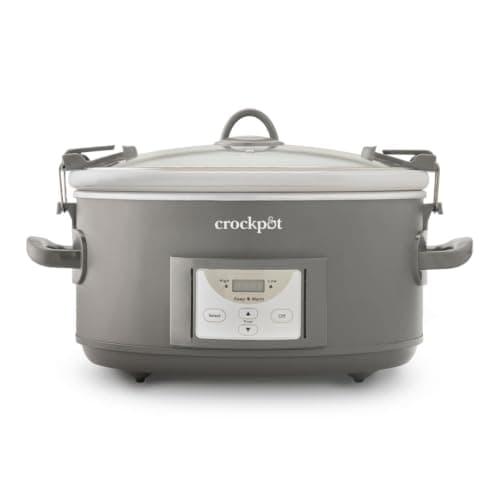
- Pot volume. Twenty-two servings of a wet dish is 6 to 7 quarts. A 7-quart slow cooker is described by its maker as cooking "meals for 9+ people", which is the right size; a 6-quart enamelled pot does the same job on a hob with the ability to sear first. A 4-quart anything is a two-batch week.
- Oven area. One half sheet pan at 17.1 by 12.1 inches holds vegetables for about six servings in a single layer. A week needs two pans, side by side, and most home ovens take exactly two. Do not crowd them — crowded vegetables steam instead of roasting, which is the difference between a tray people eat and a tray people avoid.
- Fridge shelf. This is the one that surprises people. Four large component tubs plus five lunch containers is most of a shelf, and a mixed glass assortment stacks badly. The sets built to stack are ranked on best stackable meal prep containers.
Four people, four opinions
The component system is also the answer to fussiness, and it is worth being explicit about why: nobody is served a plate that was decided on Sunday. Everyone assembles. In practice that means:
- Keep sauces separate always. It is the single highest-leverage habit — one tray of plain roasted chicken becomes four acceptable dinners, and the sauce goes on at the table.
- Keep one "plain" component. Unseasoned rice or plain potatoes for whoever is going through a phase.
- Let children build their own lunch boxes from the prepped components. The compartment boxes that make that work, by age, are on best lunch box for kindergarten and best lunch box for teens.
- Freeze the surplus on Wednesday, not Friday. Anything that has not been touched by midweek goes into the freezer in portions while it is still well inside the fridge window.
The gear this leads to
Our picks for this
Capacity first: the four pieces a family week needs
One big wet-cooking vessel, two sheet pans, and a storage assortment with enough sizes to hold components and lunches.
Best slow cooker for a week of meals
Crock-Pot Programmable 7-Quart Cook & Carry Slow Cooker
7 qt · locking lid · 30 min–20 hOvenDishwasher8.5/10Seven quarts — the maker's own figure is "meals for 9+ people" — with a 30-minute-to-20-hour timer that shifts to warm, a locking travel lid, and stoneware rated oven-safe to 400°F and dishwasher safe.
$68.20Amazon#ad · Price as of November 4, 2026 · Disclosure for the link to Crock-Pot Programmable 7-Quart Cook & Carry Slow Cooker
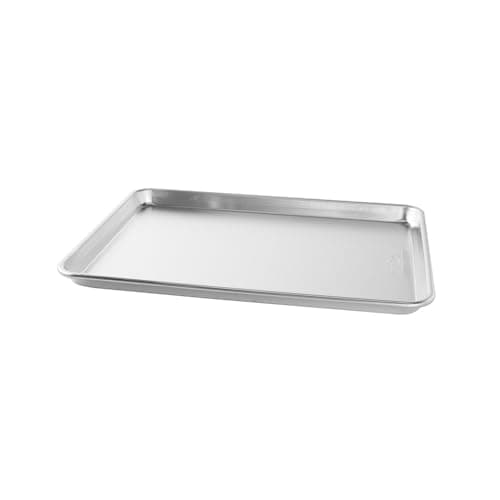
Best sheet pan for roasting
Nordic Ware Naturals Baker's Half Sheet
Aluminum · 500°F · lifetime warrantyOven7.5/1017.1 x 12.1 in of heavy-gauge aluminium with a steel rim that stops it warping, rated to 500°F and broiler-safe, lifetime warranty. Buy two: a family week needs both oven shelves.
$14.97Amazon#ad · Price as of November 4, 2026 · Disclosure for the link to Nordic Ware Naturals Baker's Half Sheet
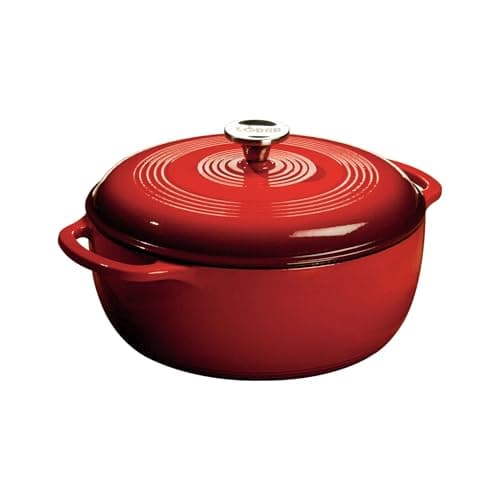
Best batch-cooking pot
Lodge 6 Quart Essential Enamel Dutch Oven
Enameled cast iron · 6 qt7.1/10Six quarts of porcelain-enamelled cast iron that the maker says handles acidic ingredients and stores leftovers in the fridge. Sears first, then braises, then goes in the fridge as one pot.
$89.90Amazon#ad · Price as of November 4, 2026 · Disclosure for the link to Lodge 6 Quart Essential Enamel Dutch Oven
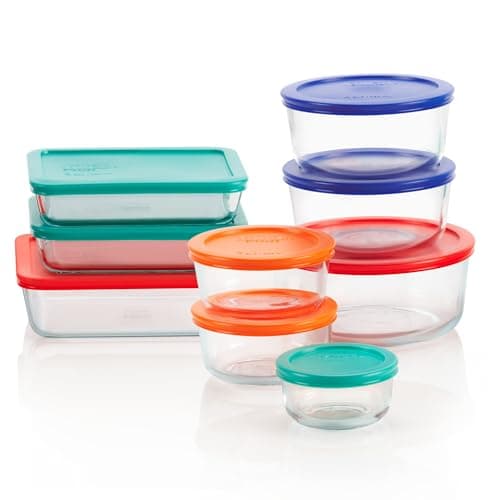
Best baseline glass set
Pyrex Simply Store 18-piece Glass Storage Set
Tempered glassMicrowaveFreezerDishwasher6.9/10Nine dishes from 1 to 7 cups: the 6- and 7-cup pieces hold components, the 3- and 4-cup pieces are lunches, the small rounds are the three sauces. Two-year warranty on glass and lids.
$37.99Amazon#ad · Price as of November 4, 2026 · Disclosure for the link to Pyrex Simply Store 18-piece Glass Storage Set
How Meal & Macro picks gear
Researched, compared and scored
Every pick starts with the maker's own product page and manual: the lid, material and care ratings in its exact wording ("leak-proof", "oven safe to 450°F", "top-rack only"), the container-fit and ice-pack arithmetic worked out from published dimensions and the USDA's numbers, and a score on a public rubric for the category that weights the seal, the material and the fit first. Models are compared side by side, so each page lands on one clear pick per use case with the reason stated. Every figure links to where it came from; where the maker's page would not load we cite a retailer and say so.
Scores are editorial judgments built from that documented research. Commissions never set a score or decide a pick. The rubrics and their weights are published.
Questions
Frequently asked
How much food do you need to meal prep for a family of 4?
For five dinners plus a couple of adult lunches — about 22 servings — budget 8 to 10 lb of raw protein, 20 to 28 cooked cups of starch across two kinds, two full sheet pans of roasted vegetables and three sauces.
Should I prep finished meals or components for a family?
Components. Four people will not eat five identical dinners, portion sizes differ, and plans change. A tub of protein, two starches, roasted vegetables and three sauces assemble into several different dinners from one cooking session.
What size slow cooker do I need for a family of 4?
Six to seven quarts if you want a week in one batch — a 7-quart is described by its maker as cooking for 9+ people. A 4-quart cooker feeds four for one dinner, which means cooking twice.
How long does family meal prep keep in the fridge?
Three to four days by USDA guidance, chilled within two hours of cooking and in shallow containers so it gets below 40°F quickly. Freeze anything untouched by midweek rather than pushing day five.
Keep reading
Related on Meal & Macro
- Meal prep for busy parentsThe same household, with time as the constraint.
- The meal prep Sunday routineThe sequence, for any household size.
- Best slow cooker for meal prepThe capacity question, ranked.
- Best pans for meal prepTwo sheet pans and what else earns the oven.
- Best stackable meal prep containersBecause a family week is mostly a fridge-shelf problem.
Receipts
Sources
- Crock-Pot — Programmable 7-Quart Cook and Carry Slow Cooker page (locking lid, 30 min–20 h, auto warm, stoneware oven-safe to 400°F, dishwasher; wording via the search index) (checked 2026-09-21)
- Nordic Ware — Naturals Baker's Half Sheet page (interior 17.1 x 12.1 x 1 in, aluminum with encapsulated steel rim, oven to 500°F, hand wash, lifetime warranty; wording via the search index) (checked 2026-09-21)
- Lodge — 6 Quart Essential Enamel Dutch Oven page (EC6D102G, dimensions, porcelain enamel, acidic ingredients and fridge storage) (checked 2026-09-21)
- Pyrex — Simply Store 18-piece Glass Storage Set product page (set contents, dimensions, tempered glass, lid care, 2-year warranty) (checked 2026-09-21)
- USDA FSIS — Leftovers and Food Safety (3–4 days refrigerated, 2-hour rule, 40°F, 165°F reheat, shallow containers) (checked 2026-09-21)
- USDA FSIS — Danger Zone 40°F–140°F (checked 2026-09-21)
- FDA — Refrigerator & Freezer Storage Chart (PDF, March 2018: cooked meat 3–4 days / 2–3 months, cooked poultry dishes 3–4 days / 4–6 months, soups & stews 3–4 days / 2–3 months) (checked 2026-09-21)
Materials, capacities, seals and care ratings come from the maker's own product pages and manuals (linked on every product) or, where the maker's page would not load, from a retailer listing we label as such. Food-safety numbers are quoted from the USDA and FDA pages linked above. Where a figure isn't published we say so. Amazon sets the prices and changes them often, so the button on every pick checks today's. Read the full method.